Thursday, 19 February 2009

Is Slumdog Millionaire Really Worth Seeing?


What is so great about Slumdog Millionaire?


Does it embrace the stereotypical lens of poverty, filth, injustice, and misery that Westerners like to see India through?

Is it a typical crowd-pleaser Masala Hindi movie, with ubiquitous song and dance sequences, car chases, bad and corrupt police, parents killed when children were small, boys become gangsters, girl ends up in prostitution, good winning over evil in the end formula guaranteed to make zillions at the box office?

Or is it a serious attempt to shock people to the truth that these poverty, filth, injustice, and misery are not going away even as India grows to take its rightful place among the nations of the world?

Are the makers of this film doing India a service by showing something Indian filmmakers could never show?


Photo source


Background of Slumdog Millionaire

Slumdog Millionaire, the 2008 British drama film directed by Danny Boyle has won lots of prestigious awards like the Critics’ Choice Awards, four Golden Globe and seven Bafta Awards as well as being nominated for ten Oscars. But, the film has had a very
poor reception in India.

Many Indian critics have not been enthusiastic about the film and it’s portrayal of poverty and life in Mumbai.
The film is based on Q and A (2005) written by Vikas Swarup, who is currently India’s Deputy High Commissioner to South Africa. The director is Danny Boyle, of Trainspotting fame and screenwriter Simon Beaufoy are British. The co-director Loveleen Tandon is an Indian from Delhi. The superb actors are also from a mixed background. 


Photo source:

British Gujarati Dev Patel, who played Muslim Anwar Kharral in the Teen soap Skins, shines again as Muslim Jamal Malik. Irrfan Khan from a Nawab family in Jaipur is the police officer interrogating Jamal Malik. The beautiful Freida Pinto, a Mangalorean Catholic plays Latika. Anil Kapoor from Mumbai plays Prem Kumar, the host of the Indian version of the show Who Wants to Be a Millionaire. The music of Allah Rakkha Rahman, the Hindu born Sufi from Chennai does justice to his fame (100 million records sold) and to the film.


The Plot of Slumdog Millionaire


A police inspector (Irrfan Khan) interrogates Jamal Malik (Dev Patel), a former street child from the Dharavi slums of Mumbai, India by using clumsy third-degree methods. Jamal is a contestant on the Indian version of Who Wants to be a Millionaire hosted by Prem Kumar (Anil Kapoor). Jamal has made it to the final question, scheduled for the next day, but the show master bribes the police into accusing Jamal of cheating. He is a lowly chaiwallah or tea-boy, without any education, and cannot know all the answers. 

They also think that he could not have gone up to the last question out of sheer luck. Jamal’s tempestuous life unfolds, and these events give him clues to the questions. In the end, the main baddies get killed, Jamal wins 20 million Rupees (a humungous sum of money anywhere), Jamal finds his childhood lover Latika and they are reunited.


Photo source:


Significance of Slumdog Millionaire

  • Slumdog Millionaire is not a pleasant feelgood orgy of visual delights. 
  • Neither is it an epic like Devdas (any version). 
  • There is no subtle poetry of underlying emotions as in Satyajit Ray’s Pather Panchali (1955). 
  • It also doesn’t look like becoming a Sholay (1975) in India. 

The director Boyle says that the 1975 blockbuster Deewar starring India’s iconic filmstar Amitabh Bachan was an inspiration for this film. Slumdog Millionaire is a very different and disturbing film, especially for Indians. Slumdog Millionaire is targeted at the channelchanger loving MTV generation. The overuse of incessant flashbacks is annoying and confuses. The portrayal of evil, misery, squalor and poverty is more gruesome than in contemporary or old Indian films like Deewar (1975). The rot in society is exposed in all ugliness. The India police are shown as inefficient and corrupt, but the local thana or police station is no Guantanamo either.

Like many movies, the screen version changes everything from character relationships to many of the major dramatic incidents. 


Photo source:

But, what it succeeds brilliantly is in archetypal representation. 

  • The lovers Jamal and Latika believe in kismat or destiny, and they are eventually reunited. 
  • The elder brother Salim chooses the dark side like Darth Vader and achieves worldly success. He eventually recognizes his mistakes and atones by eliminating the major obstacle from the path of the lovers and sacrifices his own life in the process. 
  • Jamal (a Muslim boy) is portrayed as the virtuous Rama from Hindu mythology. Jamal is not the goody goody simpleton Chance the Gardener (Being There 1979). He practises the ways of the world and takes unwitting people for a ride to make a living, but he is naturally yet effortlessly ethical and embodies some higher ideal, dharma. 

Indian Reactions to Slumdog Millionaire

“If SM projects India as Third World dirty under belly developing nation and causes pain and disgust among nationalists and patriots, let it be known that a murky under belly exists and thrives even in the most developed nations. It’s just that the SM idea authored by an Indian and conceived and cinematically put together by a Westerner, gets creative Globe recognition. The other would perhaps not.” Says Amitabh Bachan on his blog.

The Hindustan Times in India dished out five stars out of five, eulogising it as a "masterwork of technical bravura, adorned with inspired ensemble performances and directed with astonishing empathy." 
The Times of India also gave 4.5 stars, brushing aside questions about whether it was a realistic portrayal of slum life. It calls SM, "just a piece of riveting cinema." "Forget the Us versus Them debate. Just go for the pure cinema experience," the newspaper writes.
"'Slumdog' is big but it is essentially a Hollywood film," the general manager for marketing and sales, PVR Cinemas, in Mumbai's Juhu district, Joydeep Ghoshroy, was quoted as saying in the Hindustan Times.
“Had this film been made by an Indian director, it would’ve been trashed as a rotting old hat, which literally stands out only because of its stench, but since the man making it happens to be from the West, we’re all left celebrating the emperor’s new clothes.” Says Arindam Chaudhuri, Editor-in-chief, The Sunday Indian.

An outsider view often gives new insights. The secret of India’s astonishing diversity is that in its long history India has always assimilated outsider views. OutDia becomes India. Ironically, the very language many Indians use to lambast Slumdog Millionaire is English, originally an outsider language.


Tuesday, 10 February 2009

String of Anniversaries in China in 2009


China, one of the oldest and richest cultures in the world will be celebrating many anniversaries this year.


Some anniversaries are very important in Chinese culture. 


Confucius (551-479 B.C.) taught that 60 years of age signified maturity and the 60th anniversary was very important and auspicious. 

Though so intimately linked with Chinese culture for almost 2500 years any hint of Confucian thought was an anathema during the tumultuous communist era and especially during the Cultural Revolution (1966-1976). But now it’s slowly creeping back in.

This year 2009, The People’s Republic of China, the most populous country in the world,
where more cars are sold than in the USA, will celebrate the 60th birthday. Vice-President Xi Jinping, next in line to the throne of President Hu Jintao has been appointed chief organiser of the celebrations. But, unlike the flamboyant affair the 2008 Beijing Olympic was, the 60th anniversary of communist rule might be celebrated frugally (whatever that means) due to the current financial crisis. 


Significant Anniversaries in China

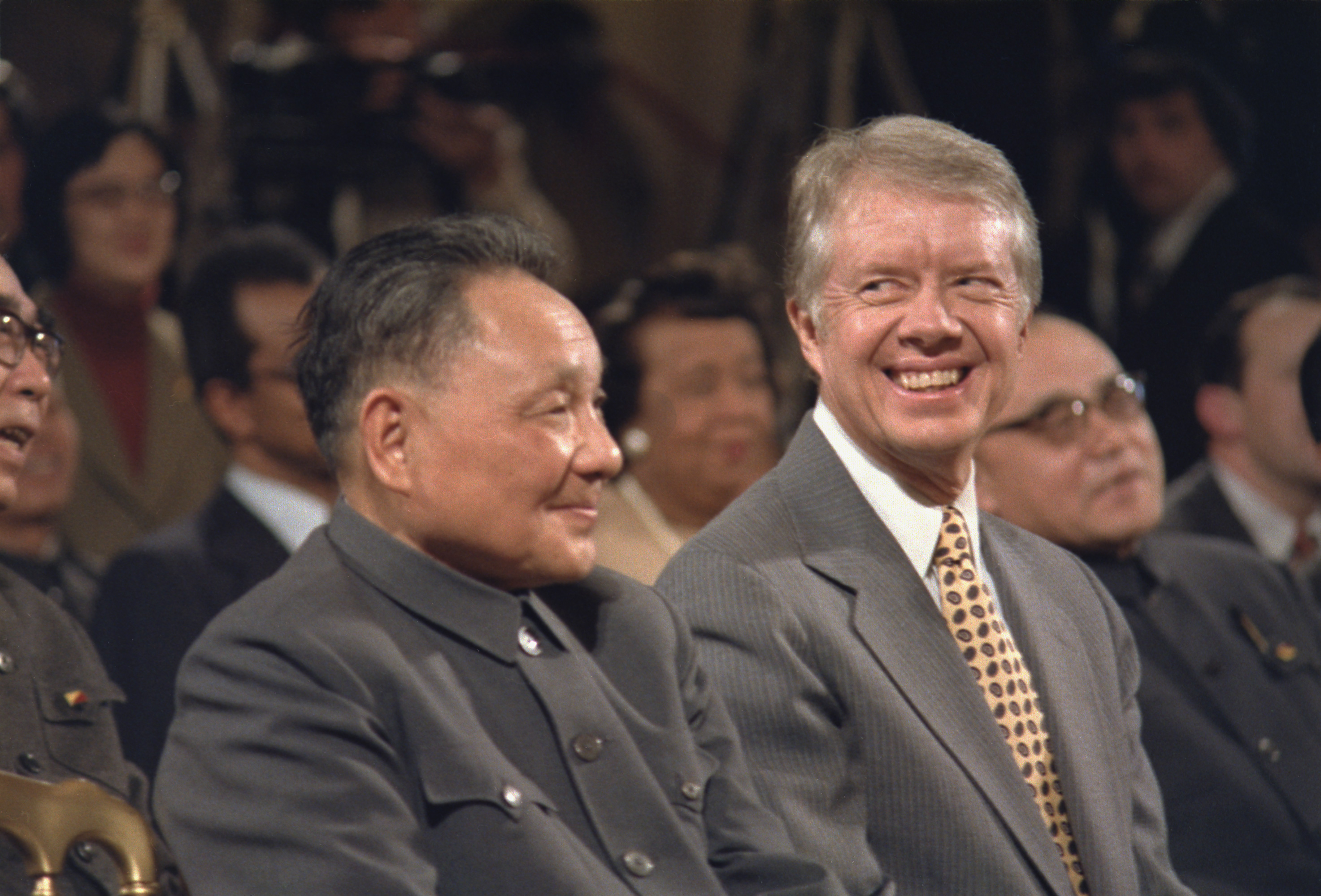
  • It’s 30 years since Deng Xiaoping initiated the era of economic, social and political reforms by proclaiming “Engels never flew on an aeroplane; Stalin never wore Dacron.” 
  • 30 years ago in 1978-79 Chinese citizens pasted the 200-metre long brick wall in front of the bus depot of Tiananmen Square in Beijing with pleas for freedom and democracy. After four months, Deng Xiaoping had enough and had the “Democracy Wall” shut down.
  • 20 years ago the world was treated to the picture of a single man, defying tanks on Tiananmen Square in Beijing as China’s leaders crushed the protests, which may have killed thousands. Their justification was that not crushing the protest movement might have created a civil war like the The Taiping Rebellion, 1851-64 killing 20-30 million people. The Guiness Book of Records calls this the bloodiest civil war in history. 
  • 20 years ago China officially approved of Thailand as a group tourist destination for citizens. Currently there are 134 such approved destinations, including USA, visited by 41 million Chinese citizens last year. 
  • 20 years ago the fully government owned Shanghai TV aired the first 90-second commercial in China for Shenguiyangrong ginseng liquor
  • 19 years ago China introduced something hated by many people in capitalist economies, Income Tax. Private persons had to pay income tax if they earned more than 800 yuans per month when the average income was 60 Yuans.
  • 10 years ago the People's Bank of China started offering individual mortgage loans. 
Photo credit: China Daily
  • 3 years ago China started establishing trade unions (controlled by the communist party) and party cells in large private firms. Even Wall-Mart has understood that resistance is futile.
  • 6 years left till China lands a robot probe on the Moon to bring home soil samples.
  • 8 years to go before China sends Chinese Taikonauts to the Moon.

Monday, 2 February 2009

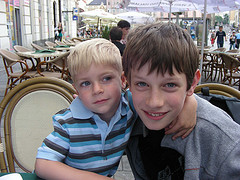
Do Biethnic or Biracial People Make Better Employees?

Do biethnic, biracial or bicultural adults make better employees at the workplace? 

This can be an extremely difficult question to research and any conclusions drawn could be rather provocatively over generalistic and even misleading. But the research question - 
"Does a Biethnic Background Provide Advantages in Adapting Socio-culturally to Workplace Norms and Behavioural Skills Requirements?" can give us more precise data.
Photo credit:

The number of biethnic or biracial people, who are children born to parents from different ethnic backgrounds has grown rapidly all over the globe. There are many studies of how biracial or biethnic children and adolescents adapt to their environment where monoethnic people, who are children born to parents from the same ethnic backgrounds are a majority by default.


But there is not much research on how biethnic adults adapt to the workpace.

As a research student at
Leicester University, UK I aimed to discover if a biethnic background provides any advantage to a biethnic adult in adapting to the modern international workplace. To make research manageable, once single country was chosen and this was Finland (because I live here).

Finland as a country is very different from a melting pot society like the USA or multiethnic UK. Only about 2% of the Finnish population of 5.2 million are of foreign origin and most of the biethnic people in Finland are in their childhood or youth. So there are not that many biethnic adults in working life in Finland.


How to Find Biethnic Employees in the Workplace?

  • The ethnicity of an employee is classified information and may not be known to managers or human resource departments. 
  • Biethnicity is not always physically visible and sometimes people don’t talk publicly about their ethnic backgrounds. 

This makes finding biethnic adults at the workplace very difficult. 48,5% of the people contacted, i.e., fourteen biethnic adults working in different organisations were located through snowballing technique and semi-structured in-depth interviews were conducted.

The interviewees evaluated their own adaptation to the norms and behavioural requirements of their current organisation and also contrasted their own adaptation with how they saw monoethnic colleagues adapted to the same workplace.


Three main findings of the Biethnic Adult Workplace Adaptation Research:

  1. Biethnic adults adapt well to the international workplace in Finland, from their own perspective and also when they contrast their own adaptation to that of the monoethnic majority in the workplace.
  2. Biethnicity or a bicultural background and other factors affect how biethnic adults adapt to the workplace in Finland. 
  3. Being biethnic or bicultural gives a unique perspective but personality traits, skills, motivation, individual life circumstances, and most importantly the interplay with others at the workplace play a greater role in the adaptation process.


Photo source:
Measuring the Socio-Cultural Adaptation of Employees

How can the socio-cultural adaptation of employees at the workplace be measured? This is not very easy as there are many subjective components involved here. Some of the following criteria affect this issue of adaptation significantly.
  • What is understood by adaptation?
  • How do people define their own identities?
  • Do the terms biethnic, biracial and bicultural mean different things or do they get mixed up in the usage?
  • Is one person's ethnic or cultural identity externally visible or easily apparent and recognised?
  • Does the person consider adjustment, adaptation to the workplace as a desirable state of affairs?
  • Are the persons own criteria for success of adaptation the same as other peoples' criteria?
  • How does one know that one has 'successfully' adapted?
Photo source:

Many even large organisations in Finland do not have any measures for facilitating the socio-cultural adaptation of employees by focussing on norms and behavioural skills requirements, though they regularly have normative systems for inducting new employees by guiding them through work processes, organisational systems, practical facilities and task requirements. 


People From Biethnic Backgrounds Adjust Well Socially


Yes, people from biethnic backgrounds adjust well socially, there is no indication that their adaptation is anyway faulty or less successful.


Photo credit:

Barack Obama, the eloquent president of the USA has now become a glorious mascot for biethnic people as highly successful and able individuals, who rise and succeed against many odds.

Successful socio-cultural adaptation to the workplace or organisational socialization is a very complex process dependant on many variables and the research subjects confirm this. The findings of this research, however, stand out in stark contrast to some earlier adaptation literature, which suggested that offspring from mixed marriages adjust badly socio-culturally.


What is the Message of Biethnicity Research for Organisations?

The working environment in our world has become more demanding and stressful, though many things have consistently improved over the decades. 

Management and human resource functions have become aware of the great importance of systematic and well-planned measures to manage talent in organisations. 


Photo source:

The biethnicty workplace adaptation research findings suggest that organisations should consider integrating norms and behavioural skills requirements into strategies for improving organisational socialization of employees in addition to task and process induction commonly used in organisations.

More details of biethnicity workplace adaptation research here

Some other places where this news reported by different media can be found:

EuroGraduate


I will be continuing research on the same theme some day towards a doctoral degree.


Wednesday, 21 January 2009

Will the Obama Presidency Usher in a New Era of Change?

Over a billion people all over the world watched on TV and over the Internet, over 200 million Americans watched from home and about 2 million Americans attended President Obama's inauguration at Washington DC. (wonder how many will attend the second inauguration in January 2013?)


What did we all witness?
  • The 44th president of the mightiest superpower (don’t hear much of that mighty bit anymore!) being sworn in
  • The first non-white US president ever
  • Another well orchestrated “historical” pageant Americans are so keen on and good at - The 150 year old Bible of Abraham Lincoln dragged out to witness a historical event
  • About 2 million modern comfort loving Americans throng the streets in freezing cold to witness this event
  • Totally new and fresh dress icon for women in Michelle Obama


Yes, all these but most importantly something that few people get to experience in their lifetimes. When the bed of the river of history has discernibly tilted in a certain direction, a Moses like figure appears and promises that by being united in will, effort and commitment all the people together can change the direction the river of history will take. 


Photo source:

By an astonishing quirk of history the backdrop against which this tumultuous scene unfolds is graced by the parting president, now widely acknowledged as the most incompetent leader in American history by many historians.


Photo source:

The reigning dynasties of Bushes, Clintons and Kennedys are all there among the hawks, foxes and wolves of Capitol Hill. The two million strong ordinary folks have brought a message that they are tired of the arrogance of the incumbent. 

The new leader has woken the people to a new vigil. The 3rd President Jefferson’s word ring true here. 
“If once the people become inattentive to the public affairs, you and I, and Congress and Assemblies, Judges and Governors, shall all become wolves. It seems to be the law of our general nature, in spite of individual exceptions.” 
So, is this president an individual exception? Only time will tell.


USA in the Same Position as Britain at the End of the Victorian Era

  • It remains to be seen if this lanky man with a sprightly gait with very little money like another lanky lawyer 160 years ago is the exception. 
  • The state of the economy is grim, productivity is sinking and mismanagement competes with corruption to divide the nation into the arrogant wealthy despising the increasing masses of the dispossessed. 
  • Two totally unnecessary wars have drained resources and sapped the moral strength of the nation. 
  • USA has reached the stage of imperial decay like Britain in the end of the Victorian era when about 20-30% of the profits of the industrial-commercial complex come from foreign direct investments. 
  • To protect these interests, America has military presence in over sixty countries, like Britain then.

Can American ingenuity and resolute action clinch again initiatives in the field of production and commerce without the need for coercion? 


Photo source:

Will Americans rediscover the idea of America, which has stood as a beacon of inspiration for people tortured by the storied pomp of the ancient lands and attracted the wretched refuse of their teeming shores, the homeless to a promised land of life, liberty and the pursuit of happiness?

Expediency or ideals, brute force or diplomacy, fear mongering or courage to make hard decisions – the task is hard and the night is long.


Will President Obama really be able to make any changes? There are two options. His high rhetoric and idealism will be contagious and result in positive changes. Issues which had been neglected or unapproachable due to partisan politics would be addressed and the continuous wars would stop.

The other option is that the destiny of the American Empire is too rigidly en route wherever it is going and the high priest of oratory will be remembered for his beautiful words and other things will just get worse. This seems rather more likely when one considers that 25% of Americans have a mental disease and 50% will get one in their lifetime, according to US Adult Mental Illness Surveillance Report.


Historical Example of Grand Success from Ancient Persia

One of the earliest success stories of this Herculean task is from a place labelled as the “Axis of Evil” by the previous administration. Around 540 B.C. Cyrus the Great of Persia got rid of the impious Nabonidus and ushered in an era of tolerance, prosperity and reforms. He also managed to settle for a time one crucial issue President Obama tactfully omitted from his inaugural speech – the Jewish-Palestinian question.


Photo source: 

This first 'human rights charter' in history, the Cyrus Cylinder, which can be freely seen at the British Museum in London bears witness as does the Book of Ezra in the Bible, that even the Jewish question can be solved if there is a will.

Yes, we can! There is hope (of what, that is another question)!

The new official White House website is now more open than the George II version.


Photos Source: Wikimedia Commons


Saturday, 17 January 2009

Why Should We Force Our Religious Views on Others?


The advertisement "There’s probably no God. Now stop worrying and enjoy your life.” runs on 200 buses in London and 600 vehicles in England, Scotland and Wales in an advertising campaign. The atheist Professor Richard Dawkins and the British Humanist Association officially back this anti-God campaign.


Bus driver Ron Heather, from Southampton, Hampshire, UK walked out of his shift on Saturday in protest. His employer, the bus company, First Bus said in a statement: 
"As an organisation we don't endorse any of the products or sentiments advertised on our buses. The content of this advert has been approved by the Advertising Standards Agency and therefore it is capable of being posted on static sites or anywhere else."

Photo source:

Hanne Stinson, chief executive of the British Humanist Association, expressed: 
"I have difficulty understanding why people with particular religious beliefs find the expression of a different sort of beliefs to be offensive. "I can't understand why some people seem to have a different attitude when it comes to atheists."

Do States Define the Religions of its Citizens?

Is this ad inherently different from the message of organised religions? A building, a church, a temple, or a mosque is also a loud proclamation of the faith of believers. Buildings and religious congregations satisfy the needs of members, but without attacking other people faiths. Stating your viewpoint and professing your faith need not undermine or attack anyone else’s faith.
Most countries of the world are tolerant of different religions or religious views of inhabitants. States have however, often taken extreme positions of intolerance. For example, on February 27, 380 AD, the Byzantine emperor declared, "Catholic Christianity" the only legitimate imperial religion, ending state support for the traditional Roman religion and tolerance for others. 


Track Record of the Catholic Inquisition

The Catholic inquisition is seen as a very bloody and gruesome affair. 

30 external historians working together with Vatican authorities, however found that more women accused of witchcraft died in the Protestant countries than under the inquisition.

Photo source:

Outside Europe, the inquisition was a different story. The Goa inquisition, between 1560 and 1812, was designed to punish relapsed New Christians (Jews and Muslims). From the scant records not destroyed in 1812, it seems to have brought to trial 16 200 out of which 64 were burned and 57 executed.

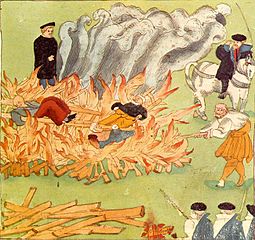
The Inquisition Symposium, established in 2000 by the Pope, found that the Inquisition burned 59 women in Spain, 36 in Italy, and four in Portugal. At the same time in Europe, civil justice brought to trial 100,000 women and burned 50,000 of them. About 26,000 were condemned as witches in Germany.

Photo source:

Theocratic States in the World Today

Though in Norway, Finland and Sweden the Lutheran Church and the state are joined, currently only Islamic states are theocratic. Saudi Arabia requires all Saudi nationals to be Muslims. The state recognizes individuals’ rights of non-Muslims to worship in private. Israel is also a Jewish theocracy, with a population 76.1% Jewish, 16.2% Muslim, 2.1% Christian, and 1.6% Druze, with the remaining 3.9% of other religions. But, Israel allows freedom of religion by law even to Israeli citizens.


Photo source:
The first modern Islamic state, Pakistan was founded on 14th August 1947. According to Section 295C of the Pakistan Penal Code you get the death penalty if you 
"by words . . . or visible representation . . . or by any imputation, innuendo, or insinuation, directly or indirectly, defile the name of the Holy Prophet Muhammad." 
You can be sent to ten years in jail for outraging the religious feelings of any group. As of mid-2002, only the testimony of a single Muslim is sufficient to prosecute a non-Muslim on blasphemy charges.

Religion of Ruler Defined by Law

There are only few countries where the religion of the ruler is defined by law. 

  • Saudi Arabia requires all Saudi nationals to be Muslims. As a ruler of Saudi Arabia has to be a Saudi national, the ruler has to be a Muslim. 
  • The Supreme Leader of the Islamic Republic of Iran with its Shi’a Islam of the Jaafari (Usuli) school of thought also has no choice about religion.


  • The Emperor of Japan is currently the only ruler with the title of Emperor. In 1946, with pressure from US General MacArthur, he renounced his claim to being divine in human form (akitsumikami), but he did not renounce being a Aahitogami (a Kami or spirit being born in human form) or a descendant of Amaterasu (Sun Goddess in Shinto religion). 
The 44th US president Barack Obama can convert to Islam, Hare Krishna, Bahái, or any other faith. But, one other very liberal Western democracy has a religious straightjacket for its ruler. The constitutional law prevents the monarch of UK from being a Catholic. As the head of the Anglican Church and as the “Defender of Faith”, the monarch cannot but be an Anglican Protestant officially. This could be a toughie for Prince Charles (with his holistic views and penchant for alternative 'treatments') when his time comes.


Further References:
  • Peter Wetzler, Hirohito and War, University of Hawai'i press, 1998, p.3
  • Encyclopaedia Britannica Online. Encyclopaedia Britannica, Inc.
  • Encyclopædia Iranica. Center for Iranian Studies, Columbia University.
  • Levack, Brian P. The witch hunt in early modern Europe, Third Edition. London and New York: Longman, 2006.
  • Monter, William: Witch trials in Continental Europe, (in:) Witchcraft and magic in Europe, ed. Bengst Ankarloo & Stuart Clark, University of Pennsylvania Press, Philadelphia 2002, pp 12. 
  • Salomon, H. P. and Sassoon, I. S. D., in Saraiva, Antonio Jose. The Marrano Factory. The Portuguese Inquisition and Its New Christians, 1536-1765 (Brill, 2001), pp. 345-7.