Monday, 8 February 2010

Languages Are Becoming Extinct Faster Than Animal Species


How does it feel to be alone in the world, when no one else speaks or understands your language?


While travelling, you can easily feel being in such a situation even though your mother tongue would be English, Mandarin Chinese, or Spanish, which are all spoken by millions of others. A call home or to a friend would allay fears when you hear familiar sounds or read familiar symbols on printed or electronic media. You know that even if you are temporarily surrounded by strange people, symbols and sounds, your ‘own people’ exist back home.

But to live with the certain knowledge that no matter how much you travel or call around, you are the last speaker of your language is probably gruesome.

Boa sr. had to live with this feeling for decades. Last week an ancient language Aka-Bo in India’s Andaman Islands became extinct as the last speaker Boa sr. died.


Listen to her hauntingly chanting voice here.


How Many Languages are there in the World Today?

Currently there are about 7000 languages is regular use. Linguists claim that half of these would probably disappear by the end of this century.


About 80 “global” languages account for 80% of the world’s population’s language needs. The rest of the languages are disappearing faster than animal species are becoming extinct. Here are samples of 2000 languages from the brilliant collection of Zhang Hong, an amateur linguist in Beijing, China.


Photo source:

If you want to count 1 to 10 in 5000 languages go to Mark Rosenfelder’s site here.


What is a Language?

Ask people from different professions and you’ll get very different definitions of language. A linguist would say it is ‘a system for encoding and decoding information’. A man in the street would probably say that language is a way of communicating shared by a group of people.

Language is not only spoken and written, but could be symbols and formalized signs, gestures and movements as in: 

  • the language of mathematics
  • sign language
  • the language of flower arrangement or 
  • the language of art.

Language has certain characteristics which go beyond standard definitions.
  • Language is not limited to humans. There is for example bird language.
  • Languages can be natural like French or Japanese or artificial like Volapuk, Esperanto or computer languages like COBOL, Erlang or Fortran.
  • Language can also be miraculous, consisting of subjective human acts, which Mark Twain describes by saying “Kindness is the language, which the deaf can hear and the blind can see”.
  • Language can be very elusive and complex in nature so that most of the people even flatly refuse to listen even if they hear and see. Martin Luther King, Jr. speaks of this when he said, “A riot is the language of the unheard”.

There are many ways of studying and understanding languages. One such modern concept is phoneme, the smallest segmental unit of sound used to form meaningful contrasts among utterances. Modern linguists utilize this to study the mechanics and structure of languages. This, paradoxically, is by no means new. Pāini, the 5th century BC Indian grammarian and his 2nd century BC colleague Tolkāppiyam were using similar concepts.

Photo source:


History is Always Written By the Victors.

Whenever we try to understand the past, we have to do it through language records or artefacts. Rather often we tend to forget one aspect of written records. It seems that throughout history, victors always choose to use descriptions and interpretations of events that is most suitable to their own ends and that vilify the vanquished.


George Orwell gives an example from personal experience:
“During part of 1941 and 1942, when the Luftwaffe was busy in Russia, the German radio regaled its home audience with stories of devastating air raids on London. 
Now, we are aware that those raids did not happen. But what use would our knowledge be if the Germans conquered Britain? For the purpose of a future historian, did those raids happen, or didn't they? 
The answer is: If Hitler survives, they happened, and if he falls they didn't happen."
Even if we understand the language, we seldom go beyond language to question our basic assumptions. This we can do by only adopting a critical enough view that would often fly against majority opinion.


How Languages Become Extinct?

Genocide is one of the most common causes: When Europeans invaded Tasmania in the 19th century many cultures along with languages were snuffed.


The Hun Empire at its largest just before Attila’s death in 453 A.D. Photo source:
  • Hunnic, the language of the mighty empire of Attila the Great (4 times larger than the Roman empire) became extinct in the centuries following the dissolution of the ‘empire’.
  • Apalachee language of Florida, USA disappeared when this proud people, who practiced a form of football betting already in the 15th century and scalping the enemy lost to the Spaniards.

Repression from the larger group is also common and an ongoing process. 
  • In Denmark’s Greenland, the Kalaallisut is dying away under pressure from Danish.
  • Ethnic Kurds in Turkey are forbidden by law to teach or even print their language.
  • Native American speakers in the USA were punished for speaking their languages in schools until the 1960s 
  • The aboriginals in Australia also were forbidden from using their languages even into the 1970s.
Photo source:

Sometimes even mighty majority languages become extinct. The Tai Ahom language, which was the exclusive court language of the Ahom Kingdom from1228 to the 16th century, in eastern India, has become extinct. Could one reason be that in Tai Ahom, Verbs do not have tenses, and nouns do not have plurals. Adverbs, strings of verbs and auxiliaries describe time periods. (source: Hongladarom, K. (2005). Thai and Tai Languages. In Encyclopedia of linguistics (Vol. 2, pp. 1098-1101). New York, NY: Fitzroy Dearborn.)

Akkala Sami, a language spoken in the Sami villages of A´kkel and Ču´kksuâl in the Kola Peninsula of Russia became extinct when the last speaker Marja Sergina died in 2003. This language used Cyrillic alphabet for writing.

No serious person has ever suggested that one language becomes extinct, as it is ‘inferior’ to another one.


What Does Language Extinction Mean?
  • Does it really matter if a language dies out? 
  • Is that a loss if we forever bury sounds and symbols from the ancient forests of our history? 
  • Does it mean nowadays that we would have Internet sites devoted to that language, while no one would actually use it?
Photo source:
  • Would it be better if we had only one world language?
  • What is a language? Is it only a collection of vocabulary or a set of grammatical rules that have become standard practice over time?
  • Is language a key to how different cultures reflect ways of being, thinking, doing and knowing?
  • Is language a map in the mirror of our soul of how we as human beings relate to the cosmos and the ceaseless phenomena of life?
Many people say that language is the basis of identity. Many wars have been fought and are being fought over language and ethnicity issues. In India, following the departure of the British, states were tentatively partitioned on the basis of languages and the debate continues.

Language and Identity


If language is identity, do polyglots (people who speak many languages) have multiple identities?
  • Do bilingual people have Dr. Jekyll and Mr. Hyde struggling in them for control?
No, they don't. However, there is some research showing that bilingual people use different languages and expressions for showing different emotions and states - Here.


Research also reveals that biethnic people coming even from partly non-Western countries construct identities, which are very different from the identity models found in Western textbooks.


How Can Endangered Languages Be Saved?

Modern Hebrew in Israel is the most glorious example of an ancient language being revived and put into daily use. In New Zealand, the Maori elders have established kohanga reo or languages nests (with govt. support) to preserve their culture and languages. This model can also be seen working in Alaska, and Hawai.

In India today, census figures reveal that only 14 000 people speak Sanskrit (one of the 22 official Indian languages). There are many organized camps in India to promote Sanskrit being used as an everyday language. In 2003, a Hindu nationalist government panel even recommended translating English nursery rhymes like “Twinkle, Twinkle, Little Star” into Sanskrit.


Modern technology, especially the Internet can do wonders to help prevent languages dying out as shown by these exemplary efforts of
There are various organisation like the Living Tongues Institute for Endangered Languages, founded by Dr. Gregory Anderson help to document, revitalise and maintain endangered languages. They have devised an extraordinary method called Adopt a Language for helping a language. All the best to their valiant efforts!


What is Lost in Translation?

Many ideas, concepts and impressions of phenomena cannot be accurately translated. They are lost in translation.

Here is a site for you to test how even a simple sentence changes in translation.


If you need to confuse your friends by sending your message (in English) a bit scrambled, try this.


Sunday, 17 January 2010

Solemates – Humanity’s Fascination for Shoes


Shoes fascinate us. In every culture, shoes are more than utility items. We design, display and buy shoes we like. The desire to express our uniqueness through shoes is an ancient urge. Shoes also play an important role in determining social status or telling about our professions and character. Shoes also figure in language, as metaphors as also in dream interpretation.

Three quarters of the miseries and misunderstandings in the world would finish if people were to put on the shoes of their adversaries and understood their points of view” – Mahatma Gandhi.

Shoes in Mythology

A one-shoed man was very dangerous for Pelias in the tale of Jason and the Argonauts in Greek mythology.

In Norse mythology, shoes are crucial. Vidar, the silent God, is the sun of Odin and a symbol of resurrection and renewal. He avenges the death of Odin and kills Fenris wolf with his shoe, which has been made from all the waste pieces of Northern cobblers through all time.

In the ancient Indian epic Ramayana, Bharat asks for the Paduka or shoes of Rama, and installs them on the throne to rule in Rama’s absence.


Photo source:

For Cinderella, the glass slipper affects her transformation from low to high status. A bright engineer has calculated what qualities would the glass in Cinderella's slippers need can be so that it can stand dancing and running.  Here's the link.


Plutarch writes about the rites, the king of Delphi had to do yearly to avoid the draughts and famines that plagued Delphi when he threw his slippers at a poor girl, Charilla and killed her.

Long History of Human Footwear

How did humans in the Ice Age (ending about 12 000 years ago) protect their feet from freezing?


By wrapping them in animal hides.
Shortly after killing the animal, when the hide was still soft and supple, people placed their foot on the hide and cut out a shape around their foot. Then they wrapped the hide up to their ankle and secured it in place with strips of hide, or thongs.

Good remains of human clothing go back twenty five thousand years. The earliest remaining shoes in the world are probably about 10 000 years old, found in Fort Rock, Oregon, USA.


These excellent shoes were made from natural plant fibres, like the indigenous Yucca plant. Two piece construction of soles and shoe-body made separately came in the Roman era.
The Valmiki Ramayana of India describes how shoes were invented in the 6th millennium B.C. King Jamadagni was practising archery. Renuka, a princess was running to bring the arrows back and got blisters on her feet. The sage Vashishta healed her feet with ointments and told the king to get suitable protection for her. Voila! soles and shoes were invented.


The Arabs introduced tanned leather in Spain in the eighth century.

The first Mayflower pilgrims learned how to make animal-hide moccasins from the Amerindians and the colonies began exporting moccasins to England in 1650. America's first factory for mechanized shoe production was established in Lynn, Massachusetts in 1760. An American, Humphrey O’Sullivan, patented the first rubber heel for shoes in 1899. The first rubber soled shoes called plimsolls were developed and manufactured in the United States in the late 1800s though they were developed in Liverpool in the 1830’s.

Shoes Determine Social Rank in Different Cultures


Class distinction by footwear!


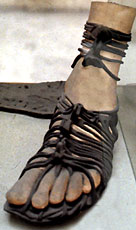
In ancient Egypt (a warm climate), slaves went bare feet. Ordinary people wore simple sandals of woven papyrus. Red or yellow sandals and those with pointed toes were only for the royalty or aristocracy.

The Etruscans and later the Romans were very conscious about who wears what on their feet. A senator would always wear matching colour stripes on his toga and shoes (calcei).


At the doorsteps, the high-ranking men would take off their shoes and put on sandals, which the slaves carried with them.


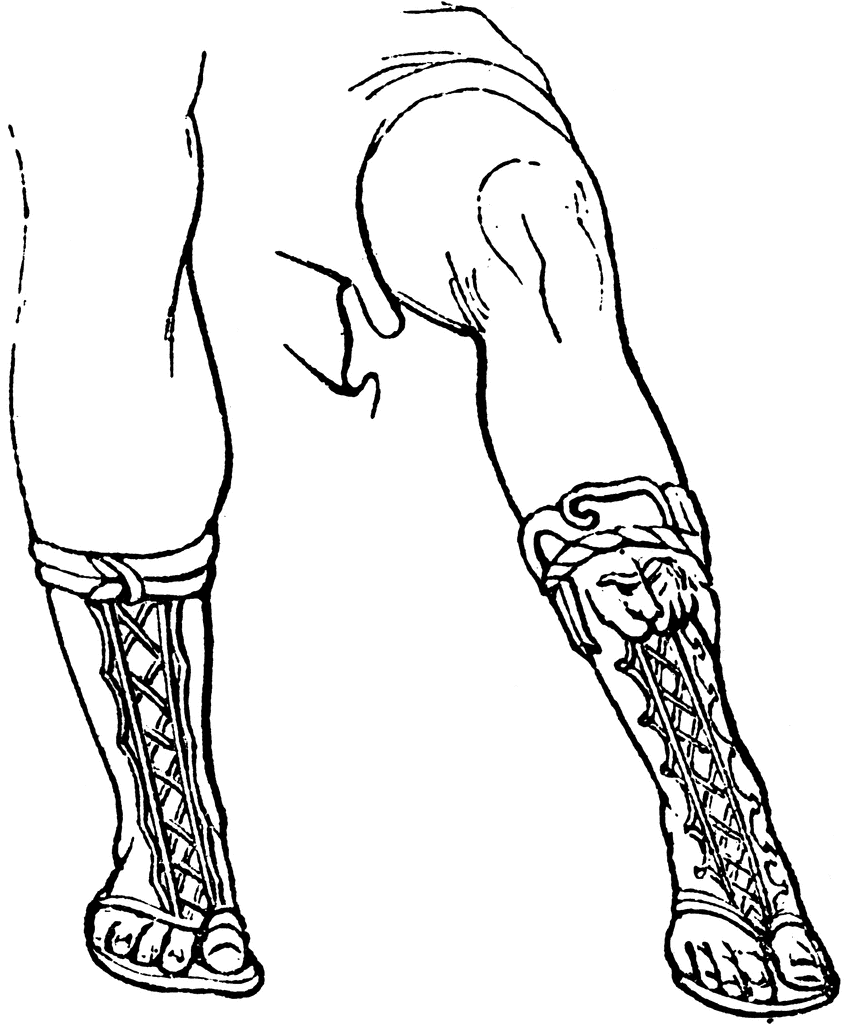
Martial Roman men wore the Cothornus to show who is the boss.


European monarchs like Louis XIV or Henry VIII used designer shoes to hide their deformities and these shoes became fashionable.


In the Qing dynasty (1644-1912), only the emperor could wear bright yellow shoes. The nobles could wear shades of golden yellow. The closest common people could get in colour shades were apricot-yellow.

Go Barefoot to Show Respect


Taking off one’s shoes to show respect is also an ancient tradition in almost all cultures. In Exodus 3,5 Yahweh commands Moses

"Do not come near; take your sandals off your feet, for the place on which you are standing is holy ground."

Hindu and Buddhist scriptures have, since ancient times, warned worshippers to remove their footwear before entering a shrine. Muslim tradition demands even today that shoes be removed before entering a place of worship. Jain pilgrims walk bare feet to avoid killing insects. In the Maori culture of New Zealand, people cannot enter the shrine called Marae wearing shoes. Many Christian religious orders like the Franciscans, Minims, the Capuchins etc choose to be discalced. This usually means wearing only sandals and not shoes.

Footwear Fashions Vary Ancient Styles

In the Little Ice Age (16th – 19th centuries), shoes replaced sandals in the colder climates. The sabot (klompen in Dutch), cut from a single piece of wood, became the typical footwear of European peasantry. The word sabotage came from these as disgruntled workers threw their clogs in machines to disrupt them.

The English version was a cloth or leather on a wooden platform.


Sometimes people may wear "tasteless" shoes to get attention.
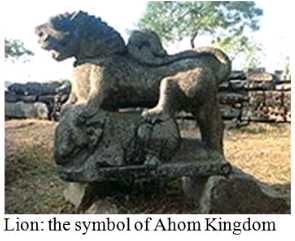
Photo source:
Wearing elaborate, unwieldy and impractical footwear is an indication of higher social rank by showing that the wearer cannot (does not need to) work. They can also signify a chosen profession.
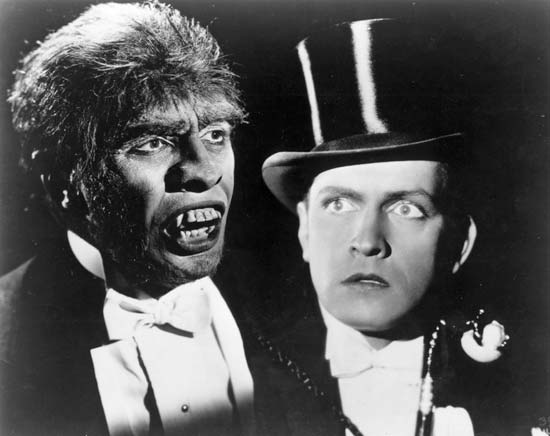
Photo source:

These modern designer men’s shoes are a definite statement other than "I want to wear these off by hard work!"


What do these shoes tell you about the wearer?


Shoes with wings are an ancient theme. The Greek God Hermes as well as the Roman Mercury had winged shoes.


So do these trendy shoes designed by the contemporary Finnish designer, Minna Parikka.


Papal Shoes - Rules About The Pope’s Shoes

The current Pope, Benedictus XVI is famous for his elegant red shoes. Cardinals are banned from using red shoes.


Shoes Meant to Control Women

The ancient Chinese custom of binding women's feet to keep them small arose from a male desire to insure faithfulness. The argument was that with such deformed feet the wife could not travel very far on foot.

Probably the same reason was for the High-heeled platform shoes becoming the rage in Venice in the sixteenth century. Women could walk and climb gondolas in these only if servants helped them.
Some shoes are meant to protect women from hurtfully behaving men. The Aphrodite shoes for sex-workers protect them from violent customers (men).


Odd Customs About Shoes
In almost all countries of the world, you can see shoes with their laces tied together thrown over poles, cables, wires etc. In Los Angeles, it is often seen as a sign of gang turf or that drugs are sold there.


Showing the soles of you shoes is a serious Arab insult. After the first Gulf war, a mosaic of President Bush the Father’s face was laid on the floor of Baghdad's best and biggest Al-Rashid hotel. Everyone had to walk on his face to enter the hotel. In 2003, US soldiers destroyed the mosaic and replaced it with an image of Saddam Hussein.

Photo source:

Shoes can be very dangerous too, as these Americans, President Bush in Iraq and a Neocon found out in Pakistan.


Shoes in Politics

Adlai Stevenson’s (defeated by Kennedy in Democratic party presidential nominations) famous hole in the left shoe, which was worn out due to walking much on campaigns has become a symbol for diligence in campaigning. There is a statue (showing the hole) in Illinois airport.


Nikita Kruschev’s granddaughter explains here the real reasons for her granddad’s shoe-banging speech at the UN in 1960.


A shoe played a great part in the first non-ideological alliance between a Christian and a non-Christian empire. When François 1, the renaissance king of France was imprisoned after the battle of Pavia in 1525, by the Holy Roman Emperor Charles V, the French king's envoy Jean Frangipani carried a letter in the sole of his shoes to France's ally, the Ottoman sultan Suleiman the Magnificient asking for help.

Sexual Shoe Fetish

Photo source:

Some people (both male and female) have sexual shoe fetishes. They get extraordinary sexual pleasure from seeing, looking at, caressing, handling and licking shoes. 

  • The American serial killer, Jerry Brudos also known as the ‘shoe-fetish slayer’ 
  • British shoe-rapist James Lloyd, who raped women and stole their shoes are notorious shoe-criminals.

Photo source

Shoe fetish in movies and Television:

  • In the film ‘There’s Something about Maryone of Mary’s ex-boyfriends with a shoe fetish used to steal her shoes. 
  • The landlord character Joe Fusco Jr., in the film “While you were Sleeping” has a shoe fetish.
  • The Bilingual Lover, a Spanish (1993) film is full of shoe fetishism
  • While You Were Sleeping (1995) starring Sandra Bullock - the protagonist has a shoe fetish 
  • Family Guy TV comedy character Glen Quagmire has a shoe and foot fetish
  • Musashi Miyamae, one of the main characters in the 2000 Japan Fuji-TV serial Bus Stop/Summer Destiny is obsessed with women's high heels

Shoes in Espionage


Spies have used shoes very effectively. In the 1960's and 1970's the Soviet KGB used shoe transmitters to hear the conversations they wanted to. By using a maid or other confidant to replace a target's shoes with these bugged ones, they changed the wearers into radio transmitters. Then their clandestine stations would pick up the conversations. However, these could not be used to make phone calls like the secret agent Maxwell Smart did in Get Smart! Even CIA's official site reports Maxwell Smart's shoe phone.

You can buy modern Chinese made Omejo Shoe cameras, which transmit photos to your mobile, here for about 300 US dollars.

There are claims that in the 1950's and 1960's CIA operative tied shoelaces in certain patterns to communicate messages. Here are some examples.


If you are into bizarre shoes, check out some extraordinary shoes here.