Have you ever thought why is it so difficult to forgive?
 Photo source:
We cannot live without making mistakes. Some people would like to believe that they are infallible like his Holiness the Pope speaking ex cathedra.
Neither can we go through life without ever having done harm to others, intentionally or unintentionally. This would mean that every one of us has at some point in life been in the receiving end of other people’s mistakes, selfish actions, misguided motives, carelessness or cruelty.
Yet, some of us seem happy in spite of having gone through horrendous suffering, deprivation and torture, while others drown in their sorrow, resentment, indignation, guilt, hurt, anger or bitterness. It follows that people, who cannot let go and forgive, suffer the most.
 Photo source:
There are clearly visible health benefits of forgiveness. Mayo Clinic lists some easily measurable health benefits
 Photo source:
What does forgiveness mean?
Typically it means ceasing to demand restorative justice.
If I forgive, I stop demanding a tit for tat punishment for the person, who has “wronged” me (as I perceive it). If I get an apology and witness visible signs of repentance, the task of forgiveness becomes easier. In fact, then I am socially and morally obligated to forgive the other person.
Forgiveness is different from pardoning, which is a legal and social act.
In condoning we justify the “offence”. Excusing brings understanding why the “offence” occurred due to extenuating circumstances.
Forgetting implies that the memory of the “injury” has slipped out of awareness and has ceased to bother actively.
Denial on the other hand, reveals an inability or reluctance to confront the “injuries”.
 Photo source:
Is forgiveness common in nature?
Forgiveness and reconciliation are not the copyright of humans.
They are very common among animals, especially dogs, birds, monkeys, chimpanzees and other primates. It is common to see animals forgiving humans after being treated badly. The human track record against animals is not so lofty overall.
Many religions have the concept of animal sacrifice, where humans take animals, slaughter them ritually and sacrifice them to their deity to atone for sins, hoping for boons or protection etc. (for the humans).
Forgiveness is an often-repeated theme in most religions. The Romans even had a goddess for mercy, clemency and compassion, Clementia.
 Photo source:
In Christianity, Jesus sets a personal example of forgiving by praying for his crucifiers "And Jesus said,
Judaism is more precise in the matter of forgiveness. Not God but humans forgive us our transgressions against them. In the Tefila Zaka prayer just before Yom Kippur, humans pray for God to influence others to forgive us and not directly wipe the slate clean “…so may You grant me grace in the eyes of others, that they too forgive me absolutely."
 Photo source:
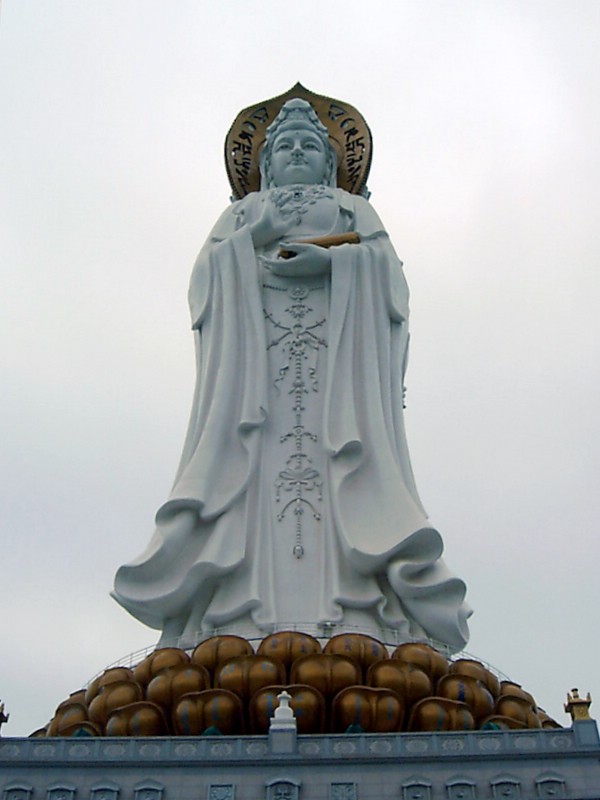
In Buddhism, Avalokiteshwara is the embodiment of compassion. Buddhism goes directly to the mechanism of how forgiveness is a release of negative thoughts, seen as impediments to spiritual growth, harmony, peace and our own wellbeing.
 Photo source:
Many people see forgiveness as a sign of weakness.
The philosopher Nietzsche calls it “sublimated resentment” and warns us about those who forgive too easily.
The ancient Indian epic, the Mahabharata echoes this sentiment.
 Photo source:
Some people see forgiveness as having a moral component, which allows the forgiver to elevate himself above the “deficient” other by the act of forgiving. They claim that in forgiveness a real letting-go does not happen but the moral superiority is the reward of the forgiver.
Some faith-based religious communities exhort people to forgive everything unconditionally. In these settings, the act of forgiveness is a scripted event, which leaves no alternative than to publicly forgive. This is very trying for people who are abused by religious leaders, who ask for unconditional forgiveness and then continue with the same behaviour, while having moral authority over the “injured”.
 Photo source:
Modern behavioural sciences have brought us lots of research and helpful tips to learn to forgive. The links of health and wellbeing to forgiveness has been proved by research.
 Photo source
Is this the same mechanism of forgiveness that Jesus addresses in Mathew 18:21 and 18:22?
If 20 steps are too daunting for you, here is a 9-step forgiveness programme.
- What is the real nature of forgiveness?
- Can animals forgive?
- Is forgiveness difficult because people think it is weakness to forgive?
- Is forgiveness only good for society or does it bring healing and mental wellbeing to us when we forgive?
- Does behavioural science research support this?
 Photo source:
 We cannot live without making mistakes. Some people would like to believe that they are infallible like his Holiness the Pope speaking ex cathedra.
Neither can we go through life without ever having done harm to others, intentionally or unintentionally. This would mean that every one of us has at some point in life been in the receiving end of other people’s mistakes, selfish actions, misguided motives, carelessness or cruelty.
Yet, some of us seem happy in spite of having gone through horrendous suffering, deprivation and torture, while others drown in their sorrow, resentment, indignation, guilt, hurt, anger or bitterness. It follows that people, who cannot let go and forgive, suffer the most.
Health Benefits of Forgiveness
 Photo source:
There are clearly visible health benefits of forgiveness. Mayo Clinic lists some easily measurable health benefits
- Less stress and hostility
- Lower blood pressure
- Fewer symptoms of depression, anxiety and chronic pain
- Lower risk of alcohol and substance abuse
The Meaning of Forgiveness
 Photo source:
 What does forgiveness mean?
Typically it means ceasing to demand restorative justice.
If I forgive, I stop demanding a tit for tat punishment for the person, who has “wronged” me (as I perceive it). If I get an apology and witness visible signs of repentance, the task of forgiveness becomes easier. In fact, then I am socially and morally obligated to forgive the other person.
Forgiveness is different from pardoning, which is a legal and social act.
In condoning we justify the “offence”. Excusing brings understanding why the “offence” occurred due to extenuating circumstances.
Forgetting implies that the memory of the “injury” has slipped out of awareness and has ceased to bother actively.
Denial on the other hand, reveals an inability or reluctance to confront the “injuries”.
Forgiveness in Nature
 Photo source:
Is forgiveness common in nature?
Forgiveness and reconciliation are not the copyright of humans.
They are very common among animals, especially dogs, birds, monkeys, chimpanzees and other primates. It is common to see animals forgiving humans after being treated badly. The human track record against animals is not so lofty overall.
Many religions have the concept of animal sacrifice, where humans take animals, slaughter them ritually and sacrifice them to their deity to atone for sins, hoping for boons or protection etc. (for the humans).
Forgiveness in Religions
Forgiveness is an often-repeated theme in most religions. The Romans even had a goddess for mercy, clemency and compassion, Clementia.
 Photo source:
 In Christianity, Jesus sets a personal example of forgiving by praying for his crucifiers "And Jesus said,
'Father, forgive them, for they know not what they do.'" Luke 23: 34.In Islam, the Holy Quran defines true believers or Muslims as persons who avoid gross sins and vice, and when angered they forgive (Qur’an 42:37).
Judaism is more precise in the matter of forgiveness. Not God but humans forgive us our transgressions against them. In the Tefila Zaka prayer just before Yom Kippur, humans pray for God to influence others to forgive us and not directly wipe the slate clean “…so may You grant me grace in the eyes of others, that they too forgive me absolutely."
 Photo source:
In Buddhism, Avalokiteshwara is the embodiment of compassion. Buddhism goes directly to the mechanism of how forgiveness is a release of negative thoughts, seen as impediments to spiritual growth, harmony, peace and our own wellbeing.
“He abused me, he struck me, he overcame me, he robbed me”—in those who do not harbor such thoughts hatred will cease. " -- Dhammapada 1.3–4;
Why Forgiveness is Difficult
 Photo source:
 Many people see forgiveness as a sign of weakness.
The philosopher Nietzsche calls it “sublimated resentment” and warns us about those who forgive too easily.
The ancient Indian epic, the Mahabharata echoes this sentiment.
"There is one only defect in forgiving persons; that defect is that people take a forgiving person to be weak.
That defect, however, should not be taken into consideration, for forgiveness is a great power. Forgiveness is a virtue of the weak, and an ornament of the strong…
What can a wicked person do unto him who carries the sabre of forgiveness in his hand? Fire falling on the grassless ground is extinguished of itself. And unforgiving individual defiles himself with many enormities.”(From the Mahabharata, Udyoga Parva Section XXXIII).
 Photo source:
Some people see forgiveness as having a moral component, which allows the forgiver to elevate himself above the “deficient” other by the act of forgiving. They claim that in forgiveness a real letting-go does not happen but the moral superiority is the reward of the forgiver.
Some faith-based religious communities exhort people to forgive everything unconditionally. In these settings, the act of forgiveness is a scripted event, which leaves no alternative than to publicly forgive. This is very trying for people who are abused by religious leaders, who ask for unconditional forgiveness and then continue with the same behaviour, while having moral authority over the “injured”.
How Can We Learn to Forgive
 Photo source:
 Modern behavioural sciences have brought us lots of research and helpful tips to learn to forgive. The links of health and wellbeing to forgiveness has been proved by research.
The four phases of forgiveness are
- Uncovering – Awareness of the pain resulting from deep and unjust injury.
- Decision – Realization that focussing on the injury and injurer prolongs misery. A change of heart happens and giving up intention of revenge is vital here.
- Work – New way of seeing how things transpired. Though not thinking as deserving the “injury” but understanding how the “injurer’s” actions are human failings. Can maintain goodwill to the “injurer” without reconciliation.
- Outcome/Deepening phase – Finding meaning in own suffering and seeing how forgiveness has brought emotional relief and healing.
 Photo source
Is this the same mechanism of forgiveness that Jesus addresses in Mathew 18:21 and 18:22?
“Then Peter came up and asked him, "Lord, how many times may my brother sin against me and I have to forgive him?
Seven times?"Jesus said to him, "I tell you, not just seven times, but 77 times!"Is Jesus talking about 77 separate sins of the brother or allegorically referring to how sticky and persistent the memory of the “injury” is in our minds and how the process of working with forgiveness requires much and prolonged internal work?
If 20 steps are too daunting for you, here is a 9-step forgiveness programme.
The Lighter Side of Forgiveness - Quotes
- “It's easier to ask forgiveness than it is to get permission.” Grace Hopper, in "Only the Limits of Our Imagination", interview by Diane Hamblen in U.S. Navy's Chips Ahoy magazine (July 1986)
- “Always forgive your enemies – nothing annoys them so much” Oscar Wilde