Showing posts with label Christianity. Show all posts

Monday, 28 September 2009

Who is a Real Arab!

”I don’t understand your Arab culture.” 
is the phrase I overheard at a cafe as two men wearing Western clothes were discussing very animatedly in good cheer and laughing together occasionally. Then, so typically among good friends, they had the traditional argument about ’Let me pay the bill, I insist’. This set me thinking – who is an Arab?


The stereotypical perception of an Arab in many countries is that an Arab is a Muslim, lives in the Middle East and is probably loaded with oil money. Unfortunately, another totally mistaken stereotype has started to become prevalent – the Arab terrorist. All these stereotypes are totally wrong.

What is the Definition of an Arab?

In Arab schoolbooks, the Arab world ranges from the Persian Gulf to the Atlantic Ocean and from Syria to Sudan in Africa. 

  • It was only in the 19th and 20th century that Arab nationalism created this concept of an Arab world. 

Before that, people usually identified themselves with tribes or with political structures like the Ottoman Empire. Pre-Islamic Arabic as a language dates back to the 4th century.

There are three methods of classifying as an Arab.
  1. Linguistic – If your first language is Arabic as for about 200 million people.
  2. Geneological – If you can trace your ancestry to the original inhabitants of the Arabian Peninsula.
  3. Political - The League of Arab States or Jāmiʻat ad-Duwal al-ʻArabiyya has 339 million people living in 22 states. They define an Arab as “A person whose language is Arabic, who lives in an Arabic speaking country, who is the citizen of an Arab country, whose father is an Arab, and who is in sympathy with the aspirations of the Arabic speaking peoples.”


How the Arabs See Themselves

Only 32% of the 4100 people surveyed in six Arab countries by Professor Shibley Telhami’s group at the University of Maryland saw themselves as Muslims or Arabs. 35% considered themselves primarily as citizens of their own country. Only 1% had the idea of being a world citizen.


Source:

Compare the situation to 2010.

Not all Muslims are Arabs. Arabs are only 24% of the 1,4 billion Muslims in the world. 85% of the population in Morocco and 55% in Algeria are Berbers (Famous Berbers: Zinedine Zidane, Saint Augustine, Emperor Septimius Severus) who are non-Arabs.

Most of the people living in Egypt do not consider themselves Arabs.

  • In Sudan, there are more than fifty ethnic groups and only half the population can speak Arabic.


Is Arab 'Identity' a matter of Language, Religion or Ethnicity?


Photo source:


This is a very complicated question and there are many opinions when one considers that there are so many different nation states, religious sub-divisions and ethnic variety among the 'Arabs'.

Does language and history define national identity for the Arabs more than religion?
  • There are many serious scholars, like Abu Khaldun Sati al Husari (1881-1967) the Syrian/Ottoman theoretician of Arab nationalism and author of A Day in Maysalun, who believes that language and not religion, economy and geography are important for the formation of nationalism. Language is "the heart and spirit of the nation," and history is its "memory and feeling." 
  • The British-Lebanese historian Albert Hourani in his book, Arabic Thought in the Liberal Age, agrees by claiming that Arabs are "more conscious of their language than any people in the world." 

The contrary view, that religion does play a major role, also has qualified support.
  • Abd al-Aziz Duri, the eminent Iraqi social historian says "Islam unified Arabs and provided them with a message, an ideological framework, and a state." He goes on to clarify the link between Islam and Arabism as being "were closely linked at first, but subsequently followed separate courses."

Are Arabs Antagonistic to Western Civilization?

Many people assume that Arab civilisation is eternally antagonistic to Western civilisation. The ridiculous stereotype of the Arab terrorist in the West and the equally mistaken notion of America as the ‘Great Satan’ among the Arabs do betray a history of armed conflict. From the Battle of Tours in 732 CE through the Crusades onwards there has been no love lost between the civilisations. 

Ironically, Islam has very much in common with the Judaic and Christian traditions in the form of common religious figures, customs and traditions. They are all children of Adam, Moses and Abraham. 
  • Arabs were very instrumental in transmitting scientific knowledge from the Orient to the Occident in centuries past.
  • It was the Arabs who brought the numerals and the zero. 
  • Many words in the English and Spanish languages are from the Arabic. Most people drinking alcohol wouldn’t care to know that it is an Arabic word. 
On the other hand, a significant portion of the educated people in the Arab world dress in Western costumes, are proud to speak fluent English and educate their children in Western universities.


How People Living in Arab Countries Use the Internet

The use of the Internet has started changing Arab societies politically, socially and economically as it has done in many other countries. 

It is perhaps to hasty to draw conclusions if frequency of Internet use has any positive correlation to political freedom and dissent threshold in these countries. But frequency of Internet use most certainly has a large impact on all aspects of life for people living in these countries, unless they are immune to commercial and other forms of propaganda. 


Things have changed a lot in Arab countries. In the days of Saddam Hussein, people who could afford getting Internet connection (frightfully expensive in those days) also needed to sign the following declaration.

  • The subscription applicant must report any hostile website seen on the internet, even if it was seen by chance. The applicants must not copy or print any literature or photos that go against state policy or relate to the regime. Special inspectors teams must be allowed to search the applicant’s place of residence to examine any files saved on the applicant’s personal computer.

Currently Saudi Arabia follows a very strict approach. Every single cybercafe must install hidden cameras and record the names and contact information of each customer. Actually, this is not that uncommon around the world, even in a country like Italy.

OpenNetInitiative (ONI) reports that Saudi Arabia's 'filtering' centres on the following:
  • pornography 86%
  • gambling 93%
  • religious conversion 41%
  • sites which provide tools and methods to circumvent filters 41%
What Saudi Arabia seems to care less about are
  • Israel 2%
  • religion 1%
  • alcohol 1%
  • politics 3%
  • gay and lesbian issues 11%
Wonder why the Saudi high concern with pornography is not visible in the gay and lesbian arena (86% -vs- 11%)? 
  • Is it because they think that such matters are harmless and let them do it or
  • They do it in any case so why bother or
  • The incidence of gay sexual behaviour (but not identity) is so common that there is no point in making a noise
  • What could men do with men and women do with women? - Is there a trace of Queen Victoria's supposed attitude that "Women do not do such things!" (actually it is a myth, she never said it)


Suggestions for further reading:

Sunday, 9 August 2009

How Does Your Religion Determine Your Hell?

Do you believe in a Hell and Heaven? 

You’d be surprised at the differences in the concepts of Hell in different religions across the world. The similarities are also fascinating.


Whether Hell exists physically or not is yet another taboo subject like the size, of one’s paycheck. Recently the 79-year-old Pope Benedict said that the Christian Hell was indeed a physical place. 


"… Hell, about which little gets said today, exists and is eternal for those who shut their hearts to His love."

Most Americans Believe They Are Going to Heaven and not Hell!


A national poll by the Barna Research Group in USA reveals:


  • 75% of Americans believe that they will go to heaven after dying
  • 1% admitted that Hell would be their next destination after dying
  • 39% believe that Hell is being eternally separated from God’s presence
  • 32% believe that it is an actual place of eternal torment and suffering
  • 13% described Hell as “unknown bad outcome after death.”

Photo source Shocking and gruesome photo of American soldier killed by car bomb in Afghanistan


Concept of Hell in Different Religions


Presented in alphabetical order, as all religions are equally valid and valuable paths for its followers and we should respect this.

African Religions – No Hell in most African religions. Afterlife is a ”land” very similar to this world.

Aztecs - Mictlán, the ninth and lowest level of the underworld, was a physical place in the north. Everyone who died, except warriors dying in battle, women in childbirth and those struck by lightning had to take the four-year journey to Mictlán.


Photo source:

Bahá'í Faith – Hell is only symbolic. When we are spiritually farthest from God, we are in Hell.


Photo source: Wikimedia Commons


Buddhism – Naraka, like Hinduism is the lowest of the realms of the afterlife. It is not for all eternity. Bodhisattvas like the female Ksitigarbha visit Naraka to teach and free residents of Naraka, who eventually can become Buddhas.


Chinese Hells – Move over Abu Ghraib! Someone from a government bureaucracy with a background in social security and law must have designed the Chinese Hell. There are 18 types or subtypes for each type of punishment. 

There are various sections:

  • Chambers of Maggots
  • Chambers of Eye-Gouging, 
  • Chambers of Disembowelment, 
  • Chambers of Tongue Ripping
designed for 

  • “peeping toms”
  • “people who force good women into prostitution” 
  • “crooks who use loopholes in the law to cheat and engage in malpractice”. 


Christianity – A physical place where evildoers suffer torment and wait for the Last Judgement. Some Christians believe that Hell is only symbolic, meaning separation from God; while for others it is eternal damnation. 

Most graphic descriptions are of the Christian Hell are by Dante Alighieri and Hieronymus Bosch.


Photo source:

Hinduism - No concept of linking Hell with Final Judgement as in Christianity, Islam and Judaism. Naraka is rather a place for purification rather than punishment or retribution. 


Swami Vivekananda explains: 
"There are heavens, there are hells, there are earths, but they are not permanent. If I am sent to hell, it is not permanent. The same struggle goes on and on whatever I am. How to go beyond all this struggle is the problem. The Indian idea is not to go to Heaven. Get out of this earth, get out of hell, and get out of heaven! What is the goal? It is freedom! You must be free" (Swami Vivekananda Complete Works 6:57)
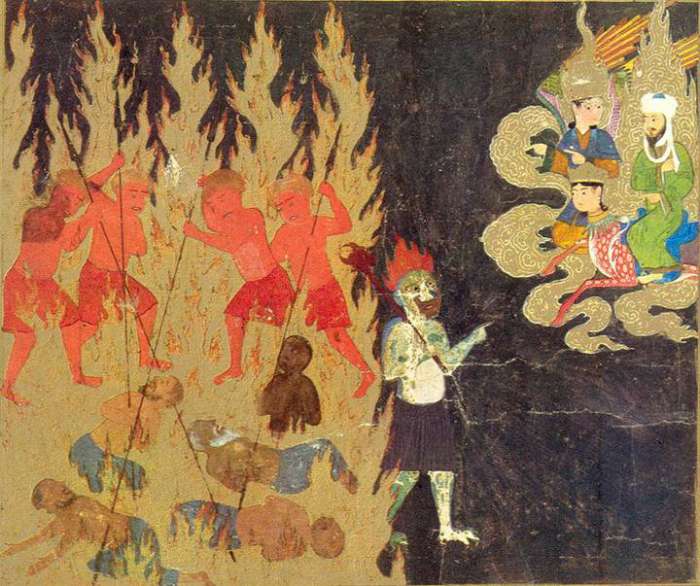
Islam – Jahannam in Islam is the Hell for the vilest tortures and damnations ever conceived and torture is ”earned” according to how much evil you did while alive. 

Zamhareer is a special ice-cold section reserved for the hypocrites and for Shirk, which is the sin of polytheism or worshipping other form of divinity than Allah.


Photo source:


Judaism – Sheol is the underworld, more like a waiting and questioning room for everyone who dies. Gehenna, a dark, silent and dusty place, is where the evil people get the full treatment of torment and damnation. Judaism also has traditions of considering Hell to be a state of suffering rather than a place.


Photo source:

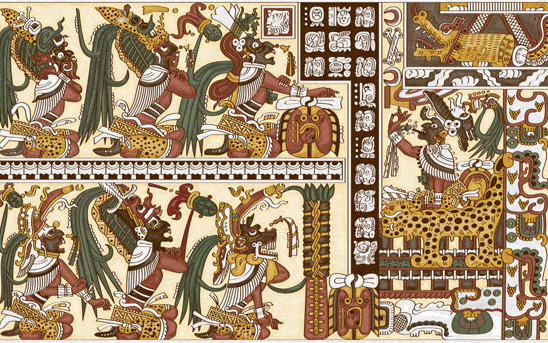
Maya – Xibalbá was the nine-levelled underworld ruled by demons. The shamans would banish diseases to Metnal, the lowest level. The road out was steep, thorny and extremely hard.


Photo source:

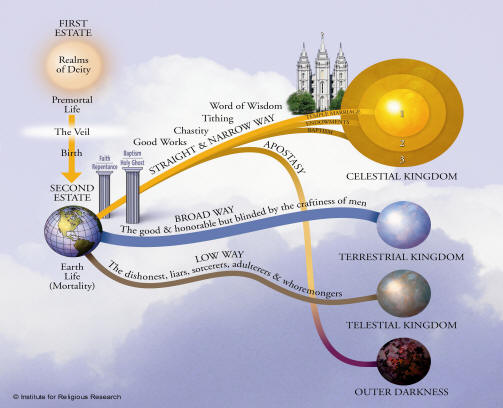
Mormons – Hell is physical but evildoers can get out when the sentence is served. Outer Darkness is a holding tank for wicked souls. Only those who repeatedly fail to be resurrected return there for eternity.


Photo source:

Native American – Great imagination at work here.


  • The Assinniboin and Athapascan tribes believed that Hell was a land of perpetual ice and snow in the north, where there was nothing desirable. 
  • The Sapona tribe believed that Hell was full of ugly women, who attacked men constantly with their unbridled passions shouting only in shrill tones. 
  • For the Natchez, Hell was covered with water. The soul was left naked in Hell to mosquitoes and the only food was spoiled fish.
Scientology – No Hells. So don't expect Hollywood celebrities as judges or guides.

Sikhism – No hell or heaven. Upon death, we merge back into the universal nature, as a drop of rain into the ocean. Hell on earth is seen as the suffering of pain caused by ego.

Shinto – Yomi is a physical place, with its entrance in the Izumo province, where everyone goes after death. Izanami, the goddess of creation and death rules in Yomi, which is more like a purification place than punishment.


Photo source:

Zoroastrianism – Vague mention of Hell as a place. Hell residents freed by three saviours at thousand year intervals.

7th Day Adventists – Wicked people sleep in the grave till the Last Judgement at the end of the world, when Jesus will cast them to Hellfire.


Read more about Dante’s description of the Christian Hell.

Take the online test to discover your level in the Christian Hell - HERE