The clock ticks, the hands of the timepiece move on. The pages on the wall calendar are turned. 2008 makes way for 2009.

Have you ever thought which calendar system do you follow?
There are many calendar systems in the world. Some are in more widespread use than others.
The Year 2009 in Different Calendar Systems is:
- 6244 in the Ancient Egyptian calendar
- 5769 in the Hebrew calendar
- 5122 in the Maya calendar
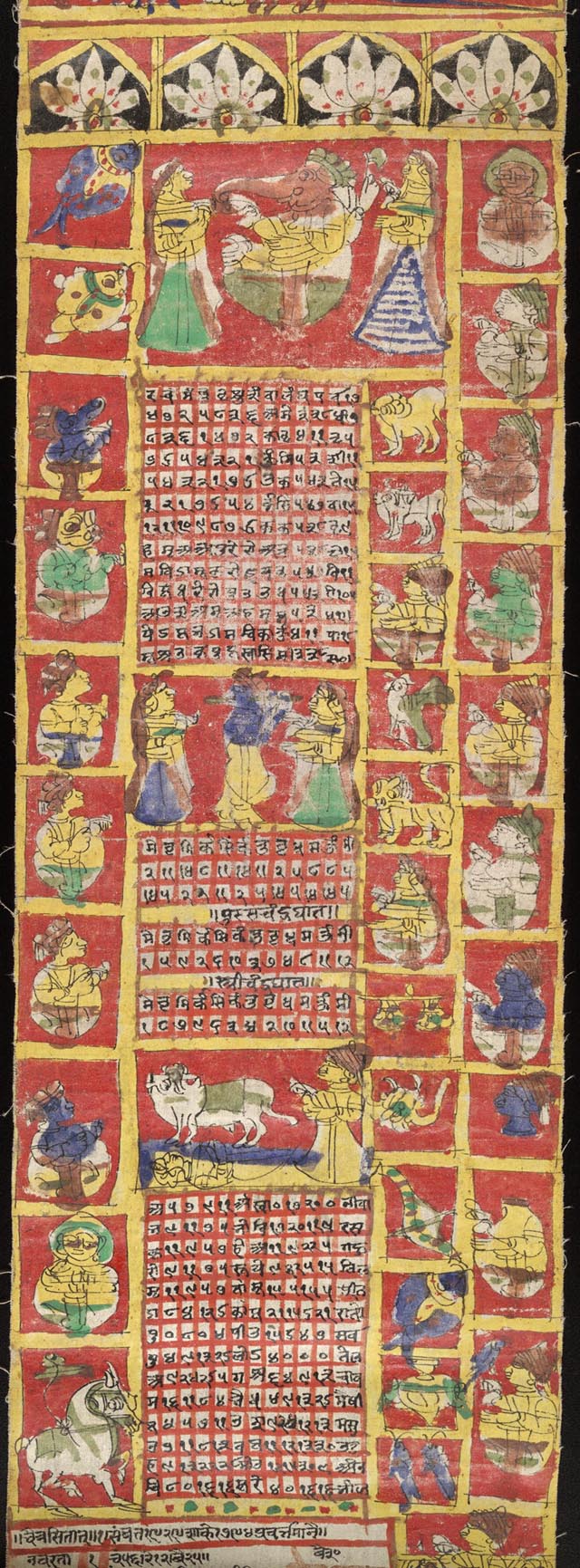
- 5106 in one of the Hindu calendars (there are 30 different systems)
- 4706 in the Chinese calendar – the year of the Ox in Chinese astrology
- 1430 in the Islamic or Hijri calendar
- 163 in the Bahá'í calendar

Yes, there are many calendar systems used in the modern world. But if we try to group them in a logical manner, we find that basically there are two types of contemporary calendar systems in use: the Lunar calendar, like the Islamic calendar and the Solar calendar like the Gregorian calendar used all over the Western world.
Lunar calendars are the most ancient ones. These were used by the Cro-Magnon human ancestors about 35 000 years ago.
The Origin of the Word 'Calendar'
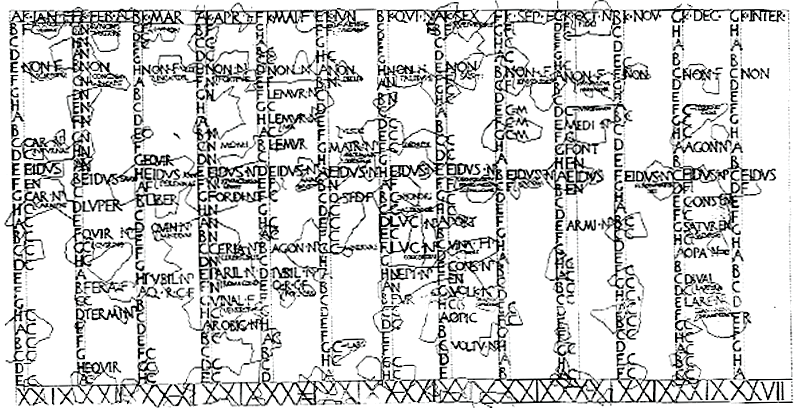
We don't know the Cro-Magnon name for the calendar but we know the etymology of the word 'Calendar'. The word ‘calendar’ comes from the Roman custom of referring to the first day of each new month as Kalends or Kalends from their word calare (to announce solemnly, to call out).
 Photo source:

Ancient Calendar Systems
In the ancient world, there was also the Lunisolar calendar system, used by the Hebrew, the Hindu, Babylonian, Tibetan, Chinese, Korean, Japanese, pre-Julian Roman calendars as well as pre-Julian Germanic calendars.
About 5000 years ago, the ancient Egyptian civil calendar had a year with 365 days, divided into 12 months of 30 days each, plus 5 extra days at the end of the year. The months were divided into 3 "weeks" of ten days each. Rather than the sun or the moon, Sothis or Sirius (a star) was the fixed point.

It is based on the heliacal rising of Sothis, or when Sothis is first visible over the eastern horizon at dawn. Like many other ancient people, the Egyptians knew that the earth takes 365.25636 days to complete one revolution around the sun. Copernicus used the extremely accurate Egyptian data to construct his tables for the motion of the planets. According to the famed Egyptologist J. H. Breasted, the earliest date known in the Egyptian calendar corresponds to 4236 B.C.E. in terms of the Gregorian calendar and the year 2009 would then be 6244.
Maya Calendar System Does Not Predict the End of the World in 2012
The Mayas in pre-Columbian Mesoamerica had a fascinatingly accurate and complex calendar system of Venus-cycles, 365-day Haab or solar calendar and the Tzolk'in or 260 day calendar. The popular version that the world will end catastrophically on October 12th 2012 according to the Maya calendar is nonsense. They even have distance dates like October 21st 4772 A.D. on their calendar.
The Mayas in pre-Columbian Mesoamerica had a fascinatingly accurate and complex calendar system of Venus-cycles, 365-day Haab or solar calendar and the Tzolk'in or 260 day calendar. The popular version that the world will end catastrophically on October 12th 2012 according to the Maya calendar is nonsense. They even have distance dates like October 21st 4772 A.D. on their calendar.

The Dogon people living in Bandiagara and Douentza in Mali, West Africa use a calendar based on a fifty year cycle, which is the time the star Sirius B takes to circle the primary star Sirius A every 49.9 - or 50 years.
People with No Calendars
American Indian tribes did not have a true calendar or a single integrated system of marking days and longer periods of time.
The remnant of the monotheistic Himba people in Ekambu, Namibia, who survived the great massacre of 1904-07, live in relative isolation by a different calendar. For them each year begins when the thunderstorms start and leaves grow from the ground.
2009 is the International Astronomy year as it is the 400th anniversary of Galileo Galilei first using a telescope and Johannes Kepler publishing his Astronomia Nova in the 17th century.
What would the ancient Maya, Egyptian, Hindu and Chinese astronomers have said to this?