The Chinese dissident Liu Xiabo being awarded the Nobel Peace Prize has upset China. Why didn’t the Nobel Committee award him the prize for literature, like they did to Winston Churchill (1953)? This would have made the Chinese people proud and their government more supportive to peace, probably.

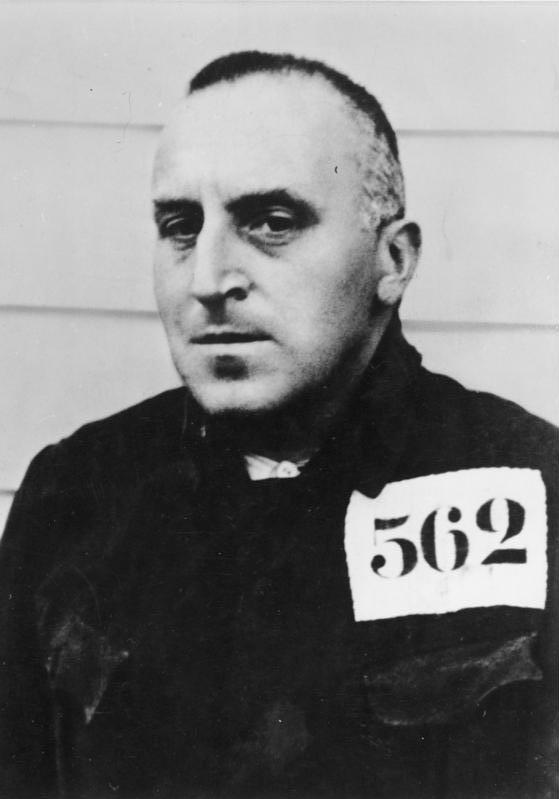
This is not the first time the Nobel Peace Prize has ruffled feathers among sensitive people. Carl von Ossietzky’s prize in 1935 angered Hitler so much that he forbade all German nationals from accepting Nobel Prizes.

In 1975, Andrei Sakharov got the Nobel peace prize but Soviet Union did not allow him to go out of the country to collect the prize. His wife read the acceptance speech at Oslo. In 1991, Aung San Suu Kyi getting the prize upset the Burmese junta and she was kept under house arrest.
Nobel Peace Prize Often Controversial
Barrack Obama’s award in 2009 was attacked as being premature and politically motivated. A president of a nation at war, Barrack Obama, after getting the prize immediately intensified the war efforts rather than end either the Iraq or the Afghanistan war.
Guatemalan Rigoberta Menchú got her peace prize in 1992 and has later been criticized for falsifying her autobiography.
Three of histories most notorious dictators in the 20th century, Adolf Hitler, Josef Stalin and Benito Mussolini have been nominated for the peace prize. Harry Truman, the US president authorising the atomic bombs over Japan was also nominated for the peace prize as also Winston Churchill.
India’s Mohandas Karamchand Gandhi was never awarded the Nobel Peace Prize though he was nominated in 1937, 1938, 1939, 1947 and 1948, the year he died. The reason he was never given the prize was probably that till then the prize had been given primarily to Europeans and Americans and Gandhi represented a new kind of figure. This change of paradigm was beyond the narrow horizon of the Nobel selection committee then. They did try to make amends for this omission when they awarded the prize to the Dalai Lama and mentioned Gandhi.
Henry Kissinger (1973) definitely didn’t become an angel of Peace but rather continued being an angel of death with very dirty hands. Yitzhak Rabin, Shimon Peres and Yasser Arafat continued in their respective pursuits, which led to much discord later on.
Betty Williams (1976) was not very loving and peaceful towards George Bush.
"Right now, I would love to kill George Bush. I don't know how I ever got a Nobel Peace Prize, because when I see children die the anger in me is just beyond belief. It's our duty as human beings, whatever age we are, to become the protectors of human life."

A UK High Court judge decreed that the government could only send a copy of Al Gore’s (2007) film “An Inconvenient Truth” to every school if it only pointed out “nine scientific errors” and gave guidelines to counter his “one-sided views”. In his film, Al Gore demanded Americans to reduce electricity consumption at home. Gore’s August 2006 electricity bills revealed a consumption of 22,619 kilowatts – more than twice the average family consumption in USA.

What Do Nobel Peace Laureates Do With The Prize Money
Some give it almost entirely to their organization or to charity like Barrack Obama did.
Baroness Bertha von Suttner (1905) gave almost all of it away to needy relatives, friends and good causes (Only a large pension from Andrew Carnegie helped her live somewhat financially worry-free).
Many Nobel laureates keep the money to themselves. The Mexican Garcia Robles (1982) openly declared that the money was for him only. Martti Ahtisaari of Finland snubbed journalists by saying
“What I do with my money is none of your business”.

Finland's Martti Ahtisaari’s Nobel Peace Prize has its fair share of critics too. It has been called the Nobel War Prize by Dimitri K Simes of the Nixon Center. Johan Galtung, the Norwegian peace scholar of Transcend International rejects Ahtisaari's contribution by claiming that he
"does not solve conflicts but drives through short-term solutions that please Western countries."
Some Nobel Peace Prize winners live by a very different set of values. Henri Dunant (1901) lived frugally and saved all the money in a Norwegian bank, beyond the reach of his creditors. William Randall Cremer (1903) lived modestly and gave all the prize money to the International Arbitration League. Jane Addams (1931), the first American Woman to get the prize gave all of it to her Women’s International League for Peace and Freedom. Albert Schweitzer (1952) used the money to expand his hospital at Lambaréné, adding a wing for lepers. President Anwar el-Sadat (1978) gave his prize money and royalties from his autobiography to his childhood village in the Nile Delta. Alva Myrdal (1982) kept enough of the prize money to hire a secretary as long as she lived and gave the rest to peace causes.
Father George Pire (1958) needed money for his relief organization for refugees "L'Europe du Coeur au Service du Monde". He wrote a letter to the Nobel Committee giving an account of his work. They eventually gave him the Nobel Peace Prize.
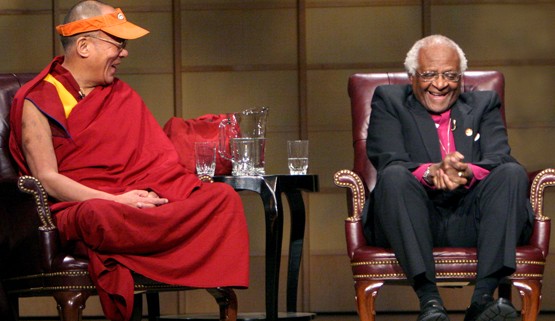
Henry Kissinger (1973) set up a scholarship fund for children of GIs who had died in the Vietnam War. Desmond Tutu (1984) created a fund to help South African blacks study in the USA. The Dalai Lama donated all the money, dividing it between those who are starving in various parts of the world, to leprosy programmes in India, to existing programmes on peace and to establish a Tibetan Foundation for Universal Responsibility.

Unusual Candidates Nominated for the Nobel Peace Prize
- Joseph Stalin, the dictator of Soviet Union, (not known to be very peace loving!) was nominated twice, in 1945 and 1948.
- Benite Mussolini, or Il Duce, the Italian dictator was also nominated
- Adolf Hitler, probably the most known 'baddie' of contemporary history was nominated in 1939
- Bradley Manning, the US soldier in jail now for leaking massive amounts of sensitive documents to the anti-secrecy website Wikileaks