Saturday, 13 March 2010

The Real Difference Between Men and Women

The difference between men and women are socially defined in most societies. Tradition, culture and religious texts are often used to support the argument that women would be inferior to men. Women have continued to challenge the power imbalance. As a result, a significant number of modern nations have granted men and women equal rights in the legal frameworks. 

But socially, economically, politically and culturally the domination of men seems to continue.


Do Women Really Have Equal Rights with Men?

It would seem that many men think so. If you ask women, they would rather often tend to disagree. The poll by The Economist 9th October 1999 shows that on average under 13% of women agree that women have equal rights with men. These are the results in different countries:
  • Australia 25%
  • Netherlands 20%
  • Switzerland 14%
  • Belgium 12%
  • UK 9%
  • USA 8%
  • Germany 8%
Should Women Really Have Equal Rights with Men?

Should women have equal rights with men? This very provocative question brings in the influence of culture and upbringing more than any other question.

When the women are asked if women should have equal rights, the same poll gives an average 62.4% (but not 100%) of women saying yes. Notice the great variations among cultures.
  • Netherlands 80%
  • Australia 77%
  • UK 73%
  • Belgium 70%
  • Germany 70%
  • USA 62%
  • Switzerland 39%
  • Japan 21%


Are Women Better Achievers than Men?

Yet another extremely provocative question which gets bogged down in the definition of achievement and how one measure it etc.

Women can sometimes be even better achievers in a typically men’s playfield, politics.
  • In India, 10% of women candidates won elections while 6% of men did.
  • 32% of women MPs had Doctoral or post-graduate degrees while 30% of men did.
This, of course, raises yet another question. Does this kind of result tell more about the candidate or more about the people who choose such candidates?


Physically and anatomically, the differences between the male and the female of the human species are obvious. 

If you are looking for the lost Neanderthals, you are more likely to find them among the males living nowadays. 


Photo source:

It is the male who is more robust, thick skulled (beyond metaphors, physically, men’s skulls are typically thicker than women’s) and the males constantly seeks to compete in sports, economics or other activities. 

Male brains are also supposed to be different from female brains.


Photo source:

Physical Differences Between Male and Female Brains

Two areas in the frontal and temporal lobes (Broca’s and Wernicke’s areas) thought to be responsible for language skills show differences. Women have 23% more stuff in Broca’s area and 13% more in Wernicke’s area.

Some researchers claim that male brains have less neurons in the corpus callosum, the part that joins the brain hemispheres, than females, while others dispute it. The cutting edge digital morphometry methods or Diffusion tensor imaging in encephalometric investigations, show that micro-structural and morphological differences are too complex. So, it is extremely difficult to say anything accurate about how brain differences affect how men and women think and behave.


Photo source:

Is it the Environment or the Anatomy that Dictate Skill Differences?

Could it be that in the dawn of time, men became hunters and gatherers because they had inherently superior navigational skills and being more robust could fight with off animals and enemies? The Society for Neuroscience supports the view that the different roles of males and females made perfect evolutionary sense. Women needed all their communication skills to hold groups together and persuade the men.

Deborah Blum writes in Sex on the Brain
The Biological Differences Between Men and Women” "Morning sickness, for example, which steers some women away from strong tastes and smells, may once have protected babes in utero from toxic items. Infidelity is a way for men to ensure genetic immortality. Interestingly, when we deliberately change sex-role behavior -- say, men become more nurturing or women more aggressive -- our hormones and even our brains respond by changing, too."
During a communication workshop I was giving, each participant had to imagine that s/he was interviewing a celebrity (dead or alive) and the partner had to pretend to be that celebrity. One woman asked her partner to be Eve (Adam & Eve). When asked, 
Why are you always naked?” 
the elegant and voluptuous Eve replied: 
Because I can! I have this beautiful body!” 
This answer expresses a core difference between the essential being of a woman from a man.

A woman is while a man needs to do. For her, being is essential and for him doing is expressing himself.
Photo source:
Why does Leonardo Da Vinci’s Mona Lisa keep us enthralled? 
  • Is she busy doing something, achieving, showing off her litter or standing in front of a table full of her cooking? 
  • She is mysterious because she is. 
Doctor Marianus in Goethe’s Faust says in the last lines Das Ewig-Weibliche zieht uns hinan!” (The eternally female draws us onward!”)

Friedrich Nietzsche, the old male loner sees the interplay between men and women as: 
The true man wants two things: danger and play. For that reason he wants woman, as the most dangerous plaything!”
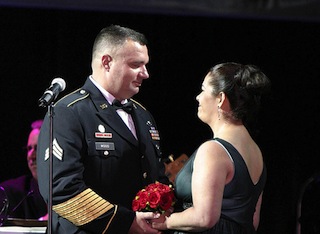
Photo source:

The folly of men

William Shakespeare in Much Ado About Nothing hits on the nail
O, what men dare do! What men may do! What men daily do, not knowing what they do!

A woman has no illusions about a man.
God made woman beautiful and foolish; beautiful, that man might love her; and foolish, that she might love him.” – Anonymous
Photo source:


Some women would rather ‘season’ their man.

“Men are like a fine wine. They all start out like grapes, and it's our job to stomp on them and keep them in the dark until they mature into something you'd like to have dinner with.”
Kathleen Mifsud


Men can also be treacherous, warns a Hollywood actress, Sharon Stone.

Photo source:


“Women might be able to fake orgasms. But men can fake a whole relationship.”


Do Men and Women Behave Differently in Similar Circumstances?


“When women are depressed, they eat or go shopping. Men invade another country. It's a whole different way of thinking.”   Elayne Boosler
Photo source


How Women of Different Centuries Communicate!
Where shall I begin? Which of all my important nothings shall I tell you first?”  Writes Jane Austen (1775-1817) to her sister Cassandra. 
"It is better to be unhappy alone than to be unhappy with someone else." Marilyn Monroe. 
"A woman is like a teabag. It's only when she's in hot water that you realise how strong she is". Nancy Reagan. 
“Nobody objects to a woman being a good writer or sculptor or geneticist if at the same time she manages to be a good wife, good mother, good looking, good tempered, well groomed and unaggressive”       Leslie McIntyre (contemporary)

Thursday, 25 February 2010

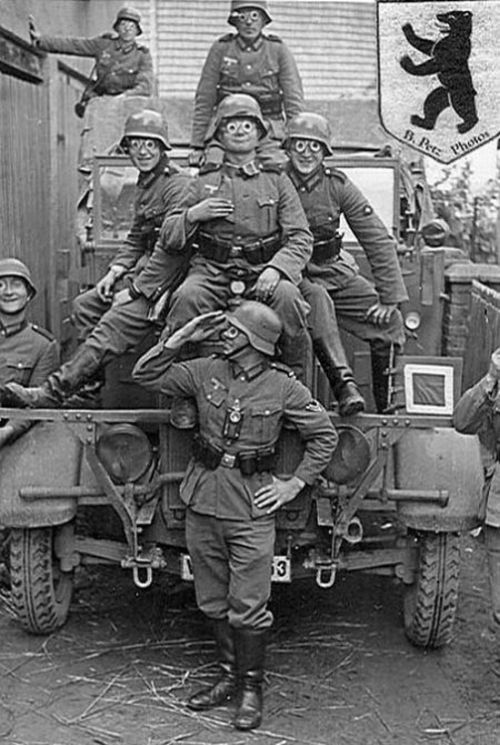
Why Were the Germans Called Huns in Both the World Wars?

Wars are always horrendous. In wars both sides lie, cheat and use propaganda to debase the opponents.

In WWI and WWII both sides called each other derogatory names. The Allies used the derogatory names Fritz, Jerry, Hun, Heinies, Kraut, Nazi, Boche (WWI) etc. for the Germans. The Germans called the Americans Ami, the Russians Iwan and Brits Tommy. Among Allies, the French were frogs and the Australians were diggers


The Germans are called Moffen in Flanders and Les Boches in Wallonia, the Austrians called them Fritzen etc. Ordinary Germans called high-ranking Nazis Goldfasan. Luftwaffe pilots called enemy fighter planes Indianer (from the cowboys and Indians game).


Why did the British call the Germans Huns in both the world wars?

Does it come from Attila the Hun? Is there a suggestion that the soldiers on the German side were more ruthless and unstoppable like Attila the Hun’s hordes?

Especially in WWI, when there were no Nazis, no side was caught with mass tortures in concentration camps or other nasty things and both sides played by the same ruthless rules of war, the derogatory name Hun was used for the Germans, why?

Theories of the Origin of the Derogatory Name Hun for Germans

There are two theories. According to one, the German soldiers’ belt carried the motto Gott Mit Uns. The Brits deliberately mistook the word Uns for Huns.


In WWI, the Allied propagandists noticed that the German soldier’s helmet with the pointed Pickelhaube resembled the ancient Hun pointed headdress and exploited this dramatically to paint them as ruthless and barbaric.


The US Army was very skilful to exploit this Hun image to instill fear and get more recruits.


The second theory puts the blame totally on Kaiser Wilhelm II. During the Boxer Rebellion in China he wanted to scare the living daylight out of the Chinese for all eternity and gave the order in his notorious speech Hunnenrede (The Hun Speech) to the German Expeditionary Corps leaving from Bremerhaven on 27th July 1900 to quell the Boxer Uprising in China. Peter Lubrecht Sr.'s excellent book Liebe Kück!: A German Soldier’s Story (2015) p.30 from the Great War narrates the story.
"When you meet the enemy, he will be defeated! No quarter will be given! No prisoners will be taken! 
Those who fall into your hands are forfeit to you! Just as a thousand years ago, the Huns under their King Etzel made a name for themselves that make them appear awe-inspiring in tradition and myth, so shall you establish the name of Germans in China for a 1000 years, so that a Chinese will never again dare to look askance at a German." Source of quote:
Current German Attitudes Towards War - Vergangenheitsbewältigung

Many people would automatically equate Nazi aggression with Germany. But even they would have to admit the burden of guilt most Germans still feel about the past atrocities and the official apologies Germany has given repeatedly. 

The Germans have a word vergangenheitsbewältigung, which means "the struggle to overcome the negatives of the past". This is a rather common feature of post 1945 German literature and culture in general. However, the same term can also refer to excesses and human rights abuses in the former communist East Germany or DDR (Berdahl, 1999).


Many people (some of them very jealous of how Germany has rebuilt itself after two World Wars and become almost the richest and strongest country in Europe) think that the Marshall Aid given to war-torn European countries by USA went towards the reconstruction of Germany. In reality UK (3297 Million US Dollars) got three times more than Germany (1448 Million US Dollars), yet Germany has become the most prosperous nation in Europe without a single act of aggression used by the state against other nations since WWII. Anyone with even a scant knowledge of history could point out how UK stands apart.

Beside Germany, no other country involved in the world wars has made guilt and shame for past atrocities so obvious and visible in their culture. According to the most recent polls, almost 70% of Germans now want their troops to pull out of Afghanistan. The Germans reluctantly agreed to send soldiers to Afghanistan under serious pressure from USA, where only 58% oppose the war.
"The war is so unpopular that politicians won't even call it a war," said Alan Posener, political correspondent for the German daily newspaper Die Welt.


Alistair Urquhart from Aberdeen, Scotland, who survived horrendous Japanese prisoner of war camps and the Nagasaki atomic bomb blast recently wrote in his book, The Forgotten Highlander: One Man's Incredible Story Of Survival During The War In The Far East that Germany has atoned for its crimes and young Germans are taught about them but Japan has not and does not teach its young about the past horrors. 

Japan being blissfully in denial about WWII atrocities is not entirely true. 

Photo source:

Japan's Crown Prince Naruhito, who became the Emperor of Japan in 2019, stressed the importance of not whitewashing the atrocities of the past, by saying publicly: 
"It is important to look back on the past humbly and correctly."
The current wars in Iraq and Afghanistan have been going on for so long that people are used to the pro-war "information". But are all the people deadened in their conscience? In USA, there is a fair amount of resistance among the young people against the Afghanistan war and military recruitment as this video shows.

Source: Berdahl, Daphne (1999). Where the World Ended: Reunification and Identity in the German Borderland. Berkeley, CA: University of California Press. p. 215.

https://www.nbcnews.com/news/world/world-war-ii-should-not-be-forgotten-japans-prince-naruhito-n311561


Monday, 8 February 2010

Languages Are Becoming Extinct Faster Than Animal Species


How does it feel to be alone in the world, when no one else speaks or understands your language?


While travelling, you can easily feel being in such a situation even though your mother tongue would be English, Mandarin Chinese, or Spanish, which are all spoken by millions of others. A call home or to a friend would allay fears when you hear familiar sounds or read familiar symbols on printed or electronic media. You know that even if you are temporarily surrounded by strange people, symbols and sounds, your ‘own people’ exist back home.

But to live with the certain knowledge that no matter how much you travel or call around, you are the last speaker of your language is probably gruesome.

Boa sr. had to live with this feeling for decades. Last week an ancient language Aka-Bo in India’s Andaman Islands became extinct as the last speaker Boa sr. died.


Listen to her hauntingly chanting voice here.


How Many Languages are there in the World Today?

Currently there are about 7000 languages is regular use. Linguists claim that half of these would probably disappear by the end of this century.


About 80 “global” languages account for 80% of the world’s population’s language needs. The rest of the languages are disappearing faster than animal species are becoming extinct. Here are samples of 2000 languages from the brilliant collection of Zhang Hong, an amateur linguist in Beijing, China.


Photo source:

If you want to count 1 to 10 in 5000 languages go to Mark Rosenfelder’s site here.


What is a Language?

Ask people from different professions and you’ll get very different definitions of language. A linguist would say it is ‘a system for encoding and decoding information’. A man in the street would probably say that language is a way of communicating shared by a group of people.

Language is not only spoken and written, but could be symbols and formalized signs, gestures and movements as in: 

  • the language of mathematics
  • sign language
  • the language of flower arrangement or 
  • the language of art.

Language has certain characteristics which go beyond standard definitions.
  • Language is not limited to humans. There is for example bird language.
  • Languages can be natural like French or Japanese or artificial like Volapuk, Esperanto or computer languages like COBOL, Erlang or Fortran.
  • Language can also be miraculous, consisting of subjective human acts, which Mark Twain describes by saying “Kindness is the language, which the deaf can hear and the blind can see”.
  • Language can be very elusive and complex in nature so that most of the people even flatly refuse to listen even if they hear and see. Martin Luther King, Jr. speaks of this when he said, “A riot is the language of the unheard”.

There are many ways of studying and understanding languages. One such modern concept is phoneme, the smallest segmental unit of sound used to form meaningful contrasts among utterances. Modern linguists utilize this to study the mechanics and structure of languages. This, paradoxically, is by no means new. Pāini, the 5th century BC Indian grammarian and his 2nd century BC colleague Tolkāppiyam were using similar concepts.

Photo source:


History is Always Written By the Victors.

Whenever we try to understand the past, we have to do it through language records or artefacts. Rather often we tend to forget one aspect of written records. It seems that throughout history, victors always choose to use descriptions and interpretations of events that is most suitable to their own ends and that vilify the vanquished.


George Orwell gives an example from personal experience:
“During part of 1941 and 1942, when the Luftwaffe was busy in Russia, the German radio regaled its home audience with stories of devastating air raids on London. 
Now, we are aware that those raids did not happen. But what use would our knowledge be if the Germans conquered Britain? For the purpose of a future historian, did those raids happen, or didn't they? 
The answer is: If Hitler survives, they happened, and if he falls they didn't happen."
Even if we understand the language, we seldom go beyond language to question our basic assumptions. This we can do by only adopting a critical enough view that would often fly against majority opinion.


How Languages Become Extinct?

Genocide is one of the most common causes: When Europeans invaded Tasmania in the 19th century many cultures along with languages were snuffed.


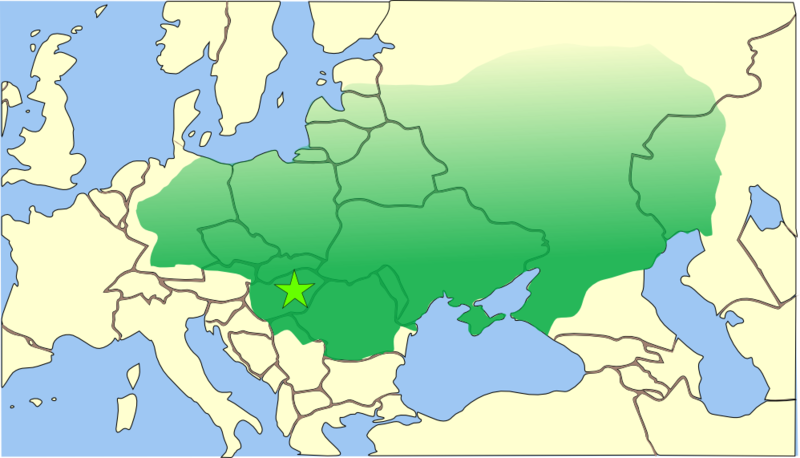
The Hun Empire at its largest just before Attila’s death in 453 A.D. Photo source:
  • Hunnic, the language of the mighty empire of Attila the Great (4 times larger than the Roman empire) became extinct in the centuries following the dissolution of the ‘empire’.
  • Apalachee language of Florida, USA disappeared when this proud people, who practiced a form of football betting already in the 15th century and scalping the enemy lost to the Spaniards.

Repression from the larger group is also common and an ongoing process. 
  • In Denmark’s Greenland, the Kalaallisut is dying away under pressure from Danish.
  • Ethnic Kurds in Turkey are forbidden by law to teach or even print their language.
  • Native American speakers in the USA were punished for speaking their languages in schools until the 1960s 
  • The aboriginals in Australia also were forbidden from using their languages even into the 1970s.
Photo source:

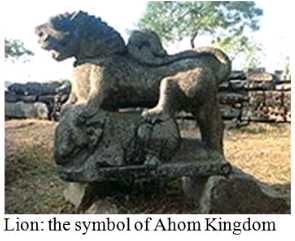
Sometimes even mighty majority languages become extinct. The Tai Ahom language, which was the exclusive court language of the Ahom Kingdom from1228 to the 16th century, in eastern India, has become extinct. Could one reason be that in Tai Ahom, Verbs do not have tenses, and nouns do not have plurals. Adverbs, strings of verbs and auxiliaries describe time periods. (source: Hongladarom, K. (2005). Thai and Tai Languages. In Encyclopedia of linguistics (Vol. 2, pp. 1098-1101). New York, NY: Fitzroy Dearborn.)

Akkala Sami, a language spoken in the Sami villages of A´kkel and Ču´kksuâl in the Kola Peninsula of Russia became extinct when the last speaker Marja Sergina died in 2003. This language used Cyrillic alphabet for writing.

No serious person has ever suggested that one language becomes extinct, as it is ‘inferior’ to another one.


What Does Language Extinction Mean?
  • Does it really matter if a language dies out? 
  • Is that a loss if we forever bury sounds and symbols from the ancient forests of our history? 
  • Does it mean nowadays that we would have Internet sites devoted to that language, while no one would actually use it?
Photo source:
  • Would it be better if we had only one world language?
  • What is a language? Is it only a collection of vocabulary or a set of grammatical rules that have become standard practice over time?
  • Is language a key to how different cultures reflect ways of being, thinking, doing and knowing?
  • Is language a map in the mirror of our soul of how we as human beings relate to the cosmos and the ceaseless phenomena of life?
Many people say that language is the basis of identity. Many wars have been fought and are being fought over language and ethnicity issues. In India, following the departure of the British, states were tentatively partitioned on the basis of languages and the debate continues.

Language and Identity


If language is identity, do polyglots (people who speak many languages) have multiple identities?
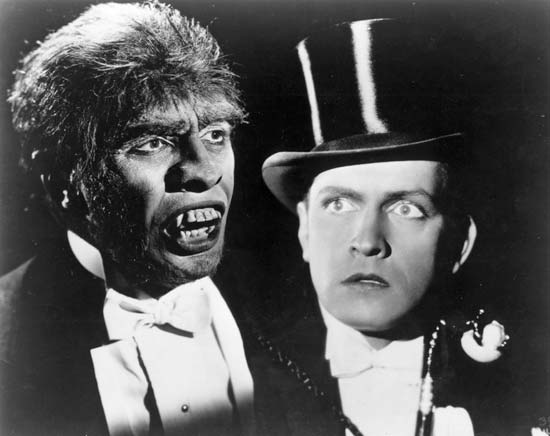
  • Do bilingual people have Dr. Jekyll and Mr. Hyde struggling in them for control?
No, they don't. However, there is some research showing that bilingual people use different languages and expressions for showing different emotions and states - Here.


Research also reveals that biethnic people coming even from partly non-Western countries construct identities, which are very different from the identity models found in Western textbooks.


How Can Endangered Languages Be Saved?

Modern Hebrew in Israel is the most glorious example of an ancient language being revived and put into daily use. In New Zealand, the Maori elders have established kohanga reo or languages nests (with govt. support) to preserve their culture and languages. This model can also be seen working in Alaska, and Hawai.

In India today, census figures reveal that only 14 000 people speak Sanskrit (one of the 22 official Indian languages). There are many organized camps in India to promote Sanskrit being used as an everyday language. In 2003, a Hindu nationalist government panel even recommended translating English nursery rhymes like “Twinkle, Twinkle, Little Star” into Sanskrit.


Modern technology, especially the Internet can do wonders to help prevent languages dying out as shown by these exemplary efforts of
There are various organisation like the Living Tongues Institute for Endangered Languages, founded by Dr. Gregory Anderson help to document, revitalise and maintain endangered languages. They have devised an extraordinary method called Adopt a Language for helping a language. All the best to their valiant efforts!


What is Lost in Translation?

Many ideas, concepts and impressions of phenomena cannot be accurately translated. They are lost in translation.

Here is a site for you to test how even a simple sentence changes in translation.


If you need to confuse your friends by sending your message (in English) a bit scrambled, try this.