Showing posts with label India. Show all posts

Wednesday, 4 January 2012

What Was Happening in the World 100 Years Ago in 1912?

Many things that happened in 1912 shaped the lives of generations to come.

Significantly, as in 2012, the end of the world scenario was already there. There were persistent rumours in Novgorod, Russia that the anti-Christ had already been born and the world would soon end.


  • People lived much shorter lives in 1912. Average life expectancy in USA was 51,5 in 1912 (now 78,3)
  • The car began to change the way people live. Ford's Model T was being mass-produced in USA.
  • The first electric self-starter for automobiles introduced – you didn’t need to go out and crank the car to start by turning a heavy handle.
  • In most “developed” countries women were not allowed to vote.

  • Zeppelins were seen as the future of air travel, but airplanes were becoming more common. Women (at least one) were allowed to fly in the UK, but not vote until 1928.
  • The first air force in the world, the Royal Flying Corps (Royal Air Force nowadays) formed in 1912. Dropping bombs from the sky became a common practice from then on.
  • The Radio started becoming a major communication tool. The Titanic would be the first ship to send a radio SOS before it sank on April 14th 1912.
  • Unions and progressive legislation started making the life of the workingman more comfortable and safer. Purer food and safer drug laws began making life healthier for everybody.

Wars going on in 1912:
  • Serbia, Montenegro and Greece declared war on Turkey.
  • Turkey attacked Bulgaria.
  • Italians at war with Turkey and took over Libya.
  • US Marines invaded Nicaragua (leaving finally in 1925) and Honduras
  • US forces land in Cuba to quell anti-discrimination protests by Afro-Cubans


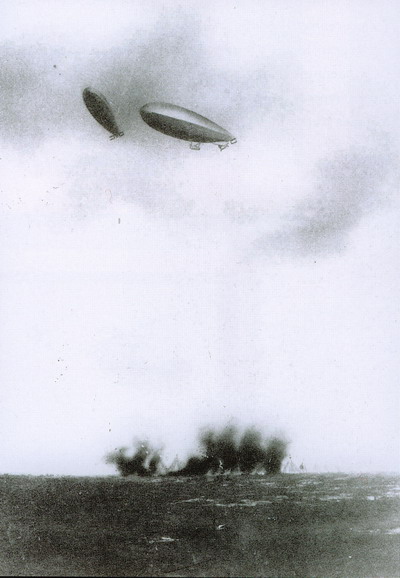
Italian Dirigibles bombing Turkish troops. The first aerial bombing in history! Photo source:

Now let’s take a look at what was happening around the world in 1912:

Australia
  • First air crash in Australia, between Mount Druitt and Rooty Hill
  • The Maternity Allowance Act 1912 granted a “Baby Bonus” of five pounds (325 GBP today) to the mother of every child born in Australia. No one even thinks of including indigenous and non-citizens. 


China
  • Bad things begin to get worse for China. Empress Dowager Longyu endorses the Imperial Edict of the Abdication of the Qing Emperor on 12.2.1912. This ends 2000 years of imperial rule in China.
  • The Republic of China is established on 1st January 1912 on mainland China (now they govern only Taiwan). Sun Yat Sen loses his presidency to Yuan Shikai (General who wanted to have himself crowned as the emperor during his presidency after Sun Yat Sen’s death).
  • Republic of China adopts the Gregorian calendar


France

  • First non-stop Paris to London flight by aviator Henri Seimet in 3 hour
  • 3 year military service chosen unanimously by the French council of war
  • Morocco becomes a protectorate of France  
  • The Archbishop of Paris decreed that "Christians must not tango." 


India
  • India’s first Indian Anglican bishop Vedanayakam Samuel Azariah appointed
  • In 1912 India introduced compulsory registration of motor vehicles.
  • Muslim Indian doctors and nurses join the Red Crescent organization established in 1912 to help Turkish troops in the Balkan war of 1912.
  • Decision taken to move capital of India from Calcutta to Delhi
  • Rabindranath Tagore, on his way to England by boat from India translates his poem Gitanjali into English. His son loses the poem in his father’s briefcase on the London Tube. An honest man tracks them down and returns the papers. Tagore’s friend Sir William Rothenstein hears about the poem, contacts W. B. Yeats. Eventually Tagore becomes the first non-Westerner to get the Nobel Prize in 1913.


Russia

Familiar? No, not Saddam or Gaddafi but Rasputin of Russia.

  • Bolshevik Conference in Prague ‘expels’ the Mensheviks - the Bolsheviks are formally established as a separate party
  • Lenin engineers Stalin, Zinoviev, and Ordzhonikidze on the Central Committee, to control Malinovsky 
  • Pravda, the Soviet communist party newspaper begins publishing 
  • Rasputin’s enemies publish the Czarinna’s adoring letters to Rasputin. Public outrage causes him to flee St.Petersburg. Rasputin returns at the Czarinna’s request and the young Czarevich’s health improves
  • Strikes begin in the Lena goldfields in Siberia as the company forces workers to eat meat from horses’ penises. Troops fire and kill 200 peaceful marchers.
  • Worker’s health insurance act passed by the Russian parliament, the Duma.
  • The Rothschilds sell all their Russian oil interests to Royal Dutch (Shell)

Thailand/Siam

  • Failed uprising against the absolute monarchy. The new king Vajiravudh, who considered himself an Edwardian gentleman, began his plans to westernize Siam. He spent his time translating Shakespeare into Thai, establishing a Wild Tiger Corps personally answerable to him alone and running up huge state debts. Emboldened by the successful overthrow of the Qing dynasty in China some army officers unsuccessfully plotted to overthrow the absolute monarchy (achieved in 1932).


UK
  • Literacy rate in UK is 40% in 1912 (now 99%)
  • Minimum wages for miners introduced after strike threats
  • Suffragettes smash shop windows in Oxford Street and destroy Pillar boxes. They were often jailed, force-fed when they went on a hunger strike and released so they didn’t die in prison.
  • Harriet Quimby, is the first woman pilot to fly across the English Channel.
  • Piltdown man, posed as the missing link between apes and humans. (It took 40 years to debunk the hoax).
  • A courier driving a horse-drawn delivery truck earned enough to buy 34 pounds of bread on his daily wages - exactly the same as a carpenter or mason in 1450. 


USA
  • U.S. Public Health Service is established
  • New Mexico is the 47th state and Arizona becomes the 48th state
  • First use of zippers in clothing
  • Tokyo mayor Yukio Ozaki gives 3000 cherry blossom trees to Washington, D.C. to symbolise the warm friendship between the countries.
  • A 190 kg meteorite explodes over the town of Holbrook, Arizona. No deaths.
  • Salonkeeper John Schrank shoots President Theodore Roosevelt. With a gaping wound and the bullet still in him, Roosevelt delivers the speech. The 50 page written speech and a steel spectacle case in his breast pocket had stopped the bullet from going too far and saved his life.
  • Average yearly income is $1,033 (for 2011 it is $ 42, 979.61)
  • A gallon of gas is 7 cents (now $ 4.50)
  • A loaf of bread is 5 cents (now $ 5)
  • A medium priced home was $ 2750 (now $ 300 000 - $ 500 000)

The Vatican
  • Pope Pius x (St. Pius) issued his Encyclical letter Lacrimabili Statu and writes 
“When so many abhor the faith or fall away from it, the zeal for spreading the Gospel among the barbarous nations is still strong in the clergy.”

Predictions Made in 1912


The coming of the wireless era will make war impossible, because it will make war ridiculous. - 

Guglielmo Marconi, pioneer of radio, Technical World Magazine, October, 1912, page 145.

This has obviously not materialised. Currently, there are 37 ongoing wars, civil-wars and insurgencies, which demand more than 1000 deaths per year according to the Uppsala Conflict Data Programme.

If you are wondering what in the world happened 100 years ago, you might be tempted to worry if 2012 is really the end of the world as so many are clamouring. 

No, rest assured, one thing is sure - The world is not going to end in 2012!


Tuesday, 14 April 2009

To Kill or Not to Kill – Who has the right to Capital Punishment?

Easter is a time of resurrection. Life triumphs over death on the religious and mythological scene. In the garden the yearly miracle, when nature shoots out dainty stems through the patches of snow or ice is a renewal of hope. 

While pondering on the sanctity of life, I was wondering how common is the death penalty nowadays.


60% of our planet’s population lives in countries, which use the death penalty or capital punishment as a deterrent to crime. Of these countries, four are the most populous in the world China, India, USA and Indonesia.


Can Institutions in the EU Kill People?


Photo source:

In the EU, Chapter 1, Article 2 of the Charter of Fundamental Rights of the European Union prohibits using capital punishments. But there is a footnote (actually a footnote hidden inside another footnote), which forbids death penalty 
"except in the case of war, riots and upheaval". 
Individual nation states are allowed to interpret what constitutes riots and upheavals, isn't that so!

Though EU member states cannot kill people legally, there are however institutions which do kill people. One of the largest European-American institutions, NATO, does not kill people and cannot do that in EU territory but in war areas (like Afghanistan or Iraq and earlier in Serbia or Bosnia) NATO gets away with lots of killing. If it’s the wrong target or the media reports later on that it’s a wedding party they killed then “Oops! We’re sorry!” and everything’s just fine. NATO needs to label undesirable people (living in far off, non EU places like Afghanistan) as terrorists or enemy combatants to justify air strikes or other military actions that kill people.

There are many ‘
institutions’ in EU, which have taken upon themselves the right to kill people when they want to. Some examples are the: 
In all likelihood, these organisations use different codes and terminology that those in TV shows like the Sopranos. If asked, members of these organisations would probably claim that they use “lethal force” against specific targets if it had approval from high on.

The Sicilian Cosa Nostra even has
Ten Commandments. The fourth and the tenth commandments are 
  • Don’t go to pubs and clubs!” and 
  • People who can't be part of Cosa Nostra: …. anyone who behaves badly and doesn't hold to moral values.
In the town of Corleone, Italy there is a Mafia museum. This is very different from the Mob Museum or Mafia Museum in Las Vegas, USA.

Budapest, Hungary also has a
mafia museum. 


Do Spooks or Spy Agencies Have a Licence to Kill?


Photo source: Wikimedia commons

In the movies and books, James Bond 007 or the “
Real 007” are supposed to have the “licence to kill”, but their employers or governments do not and would never acknowledge this. Governments of countries are also not allowed to legally kill people unless it takes place within the confines of its judicial system, and only if capital punishment is allowed in its constitution. Over the years, persistent claims that certain espionage agencies get rid off unwanted people by killing them refuse to die. Often these cannot be verified, because of the nature of the business, so rumours persist.

The
CIA is a common target of such rumours and speculations. Sir Richard Dearlove, the former British MI6 chief has openly confirmed before a British jury that MI6 was authorised to use “lethal force” against specific targets if it had ministerial approval.

The KGB or the FSB nowadays, can’t avoid such reputation with rumours of a certain “
Department Eightwhich, is reportedly involved in 
planning assasinations and sabotage in support of war or crisis activities.”

Death Penalty Global Situation


Photo source: Wikimedia commons

According to
Amnesty International: Out of 192 United Nations members, 

  • 92 countries have abolished capital punishment. 
  • 10 have retained it for special circumstances only. 
  • Fifty-nine countries have kept the death penalty and out of these 36 have not used it for over ten years.
The gold medal for maximum executions goes to China with 470 executions in 2007. Based on anecdotal evidence, the USA and HongKong based Dui Hua foundation estimates the real total in China to be 5000. Iran gets the silver medal with 317 and Saudi Arabia gets the bronze with 143.

If we calculate in executions per million people in the country: 

  1. Saudi Arabia is the world leader with 5.18. 
  2. Iran is the runner up with 4.5 and 
  3. Iraq in third place with 1.13. China falls much behind Pakistan (0,78) but is slightly ahead of USA (0.14).
More details about the US death penalty situation here.


The use of death penalty around the world (as of February 2011). Photo source: Wikimedia

In 2008 the worldwide execution rate grew to 2,390. 
  • China executed 1,740, 
  • Iran 342
  • Saudi Arabia 102
  • Pakistan 36
  • United States 37
  • Japan 15 people. 
Children were also not spared the death sentence. 

In some countries they try to execute people in a manner that they wouldn’t feel much pain, while in some countries the trend is the opposite. In Somalia, a girl of 13, who had been gang raped by three men (the men were not even arrested), was buried up to her neck in a football stadium in front of 1000 people and stoned to death.

In Iran the number of juveniles on death row grew to
140 up from 71 in 2007.


Capital Punishment Trends in Different Countries

According to an
October 2005 poll, 64% Americans, 44% Canadians 49% Britons support the death penalty. In all the three countries, support for capital punishment was lowest among 18-29 years olds.

29 % of Finns would approve of the death penalty as a punishment for certain crimes committed during peacetime. 41 % of those aged 35 to 49 are in favour of capital punishment. (Helsingin Sanomat, Suomen Gallup: November 21, 2006)

A recent government survey revealed that despite a recent rush of violent crimes in Japan, support for capital punishment had only risen by 2.1 percent, to 81.4%. (The Japan Times, February 20, 2005)


Is Death Penalty Effective as a Deterrent?


No, death penalty is not an effective deterrent! Statistics show that the opposite is true.


Photo source: Blue states have no death penalty. Dark brown = only lethal injection. Orange=lethal injection primary method, but can use others. Green= never used lethal injections.

In 2007, the average Murder Rate of Death Penalty States in USA was 5.5 per 100,000 people, while the average Murder Rate of States without the Death Penalty was 3.1 per 100, 000 people. 
  • Iowa (with no capital punishment) has a murder rate of 1.2 per 100,000 people. 
  • New Hampshire (has retained capital punishment for capital murder, but the last execution was in 1939) has only 1.1 per 100,000 people murder rate. 
  • Louisiana (a capital punishment state) has a murder rate of 14.2.
Photo source:

A 1995 study of the annual percentage increases in homicide rates in California showed that murders increased 10% a year during 1952 to 1967 when the state executed people. When California did not execute people (1968-1991) the average rate of increase was less (4.8%).

Canada's homicide rate has
dropped 27% since the death penalty was abolished in 1976.

A 1998 research study for the United Nations recommended a moratorium on the death penalty and concluded: 

"This research has failed to provide scientific proof that executions have a greater deterrent effect than life imprisonment. Such proof is unlikely to be forthcoming. The evidence as a whole still gives no positive support to the deterrent hypothesis." Source: R. Hood, "The Death Penalty: A World-wide Perspective," Clarendon Press, (1996), Page 238.

What People Say - Quotes About the Death Penalty
  • "Capital punishment is the most premeditated of murders." "For centuries the death penalty, often accompanied by barbarous refinements, has been trying to hold crime in check; yet crime persists." - 
    ALBERT CAMUS, 
    Resistance, Rebellion and Death
  • "What says the law? You will not kill. How does it say it? By killing!" 
    -Victor Hugo, author of Les Miserables
The best quote about death penalty can be attributed to the US President notorious for saying things in ridiculous ways.

  • "I don’t think you should support the death penalty to seek revenge. I don’t think that’s right. I think the reason to support the death penalty is because it saves other people’s lives."  - 
    George W Bush at presidential debate 17.10.2000

Photo source:


    Monday, 16 March 2009

    Holi in India - Unique Festival of Colours across Social Divisions

    Millions of Indians celebrate Holi all over India and wherever Indians are. 

    Brightly coloured powders are the mainstay of Holi, during which men, women, and children carry powders and liquid colours to throw and smear on the clothes and faces of neighbours and relatives.

    Photo source: Matthieu-Aubry


    Special Character of Holi Among Festivals


    Holi is a unique festival among all the cultures of mankind as it involves physical touching among all people across all kinds of social divides. 

    Contrary to ancient Roman festivals like Saturnalia, which involved a reversal of social roles in which slaves and masters ostensibly switched places during the rituals, Holi does not have any sexual connotations.


    Photo source:


    Indian culture, beliefs, and way of life typically express the myriad facets of a timeless motif in bright colours. All the colours of the rainbow are visible during Holi. The mesmerizing hues of reds, magentas, yellows, greens, violets, blues, ochre, gold, silver etc is yet another orgiastic paean of the victory of light over darkness, good over evil, hope over despair and most significantly the victory of togetherness over divisions. 

    You can read more details about Holi at Flowergirl’s wonderful site.


    Spring Festivals Similar to Hindu Holi

    There is only one contemporary cultural festival somewhat similar to Holi, where all participants can physically touch each other. 
    It is La Tomatina, a food fight festival held on the last Wednesday of August each year in the town of Buñol in the Valencia region of Spain. Thousands of participants from all over the world come to fight in a battle throwing over one hundred metric tons of over-ripe tomatoes at each other. 
    La Tomatina is not an ancient ritual but was started in 1952 to honour the town’s patron saints St. Louis Bertrand (San Luis Bertràn) and Mare de Déu dels Desemparats (Mother of God of the Defenseless). One of the most popular theories of its origin is that dissatisfied citizens attacked city councillors with tomatoes during a town celebration. 

    Photo source: Wikimedia Commons


    Spring Festivals in Other Cultures Around the World

    There are many spring festivals in diverse cultures all over the world. Though the Christian
    Easter and Jewish Passover are technically celebrated in remembrance of historical events, in essence they are spring festivals as they coincide with the onset of spring.
    Photo source:
    • The Brazilian carnival has been around since the 1640s when Parisian style balls copying Mardi Gras started. Mardi Gras is believed to have roots in the pagan spring festival which Romans called Saturnalia. Over time, adapted to Christianity, this became a farewell to pleasures of the flesh to practice repentance and prepare for Jesus Christ's death and resurrection. 
    • Rio Carnaval has become world-famous through the Samba Parade, a show, extravagant display and fierce competition of the Rio samba schools. 
    • In England Mardi-Gras is known as Shrove Tuesday and it is celebrated by the traditional making of pancakes. In many towns and villages people take part in pancake races, where they race carrying a frying pan tossing their pre-cooked pancake in the air. 

    Chinese New Year is the beginning of spring. According to legends, a mythical beast called the Nian or "Year" in Chinese, came on the first day of New Year to devour livestock, crops, and even villagers, especially children. Once the people learnt that the Nian was scared away by a little child wearing red. Since then people hang red lanterns and red spring scrolls on windows and doors and used firecrackers to frighten away the Nian.

    Photo source: Wikimedia Commons


    Kanamara Matsuri or the Festival of the Steel Phallus is an annual Shinto fertililty festival in Kawasaki, Japan. 

    Originally prostitutes prayed for protection against sexually transmitted diseases at this shrine by venerating a gigantic penis. Nowadays the festival raises money for HIV research. The origin of this festival is in a legend of a sharp-toothed demon that hid inside the vagina of a young girl and castrated two young men on their wedding nights with the young girl before a blacksmith fashioned an iron phallus to break the demon's teeth, leading to the enshrinement of the item.

    Photo source: Wikimedia commons


    Las Fallas, which means "the fires" in Valencian is one of the crazy festivals in Spain. Ninots (“puppets” or “dolls”), which are huge cardboard, wood, paper-machè and plaster statues are created and then destroyed. The extremely lifelike ninots usually depict bawdy, satirical scenes poking fun at corrupt politicians and Spanish celebrities.

    Photo source:

    Losar is celebrated by Tibetans in spring for greetings, togetherness and abundant festivities, and prayers as well.

    Photo source:

    Nowrūz is the Iranian new year and beginning of spring. People jump over bonfires while singing the traditional song Zardî-ye man az (ane) to, sorkhî-ye to az (ane) man meaning "My yellowness is yours, your redness is mine," with the symbolic message "My paleness (pain, sickness) for you (the fire), your strength (health) for me." 

    According to tradition, the living are visited by the spirit of their ancestors on the last days of the year, and many children wrap themselves in shrouds, symbolically re-enacting the spirit visits. The children also run through the streets banging on pots and pans with spoons and knocking on doors to ask for treats. The ritual called qashogh-zany (spoon beating) symbolizes the beating out of the last unlucky Wednesday of the year.

    Navroze, which means the New Day, is the most celebrated festival of the Parsis in India every year on March 21, the vernal equinox of the sun. Though only one sect of Parsis, the Faslis consider it the Parsi New Year, all Parsis join in the festivities to celebrate, greet each other and attend the thanks-giving ceremonies at Fire Temples.


    Photo source: Wikimedia Commons


    Rangoli Bihu is the festival of the people of the Assam region in India to celebrate spring and fertility. 

    Photo source:

    Setsubun (節分) or Risshun (立春) the Spring Festival (春祭 haru matsuri) in Japan. Japanese have a special ritual called mamemaki (豆撒き, meaning bean scattering) to cleanse away all the evil of the past year and keep disease-bringing evil spirits for the year ahead away.