Showing posts with label benefits. Show all posts

Wednesday, 14 August 2013

Should We Care More About Our Work - Why?


Like it or not, most of us have to work to make a living. Our work defines us more than our ancestors, educational attainment and even our relies affiliations - so do some people claim. Speaking of the way of working, two things matter most – attitude to work and competence in doing work. 

There are those who visibly enjoy their work and for them work is a means of living by a higher principle, often an irresistible inner call. Interacting with such people leaves us charged and uplifted. One instantly feels that such people care about what they are doing and they put themselves into it. They have put more of themselves in the work than the kind of lip service or “commitment” people earning huge bonuses often profess having before they leave for better pastures.

                            
Sometimes when we get lousy customer service, we know we have met one of those for whom work is a miserable tenure of drudgery. “I hate my job” is a label they carry everywhere and dealing with them usually leaves one annoyed and dissatisfied. 

When people in an organisation spend hours explaining why something requiring about 1 minute of attention and not taking anything away from anyone cannot be done for a customer, no sane person can consider this efficient or good behaviour. In spite of efforts to justify it as being ‘company policy’, it is delusional self-deception and gross inefficiency.


Should we care intensely about our work or just work with satisfactory competence?

Is there a tension between caring intensely about what you do and just doing it with satisfactory competence and earning a living? Yes, it is an ancient conflict and no modern technology or software upgrade can resolve it easily. 

What does care mean here? Does it mean pay more attention to how we work, the content of the work, or the importance we put on how others see and value our job and position? 

There are two ways of approaching the task of resolving the conflict. 
  • One is the reward perspective, the answer to the why question. 
  • The second is the perception perspective, the answer to the how question.


Why should we care intensely about our work? If work is our identity, what we do defines us. Employees are almost always evaluated on the basis of their market worth. This is the amount the employer is willing to pay for a combination of skills, effort and motivation. So, if we care intensely about our work, we have to be clear if we love our work for the benefits (e.g., salary, bonuses, prestige, social position etc.) or the content of the work. 

The benefits measure or pay satisfaction is the most common as it is easy to measure and more concrete. Pay dissatisfaction often decreases commitment, increases stealing from the workplace and significantly affect turnover (Currall et al., 2005). 

Pay satisfaction is only a part of job satisfaction (Tremblay, Sire and Balkin, 2000) and other parts may weigh more than unhappiness with salary and the employ remains in the job. 

Research shows that workers who believe in a future promotion in the next 2 years report higher job satisfaction while past promotions have a fading effect on job satisfaction (Kosteas, 2011).


On the other hand, if we care about what we do because we love what we are doing e.g., we believe that we are building the best house in the world or the persons involved in our work need our utmost commitment or the teacher is convinced that he can teach students to think critically, then the measurement of our commitment slides from a market value orientation towards an inner yardstick of morality, ethics and values. 

If the question becomes “Can I live with what I am doing?” the degree of introspection needed is much more intense and personal than just an evaluation of market worth in money.


Cultural Variations for Job Satisfaction


Research findings (Bauer, 2004) show that there are huge variations in how people living in different countries are satisfied with their work. It's not that people in rich countries are happy, while workers in poorer countries complain or the reverse. It's not also directly related to weather. People in lovely weather countries can also complain, a lot. 

Only 11.6% in sunny Portugal along with 14.4% in Spain are very satisfied while 53.8% in Denmark report being very satisfied. Only 0.8% in Ireland hate their job, while 5.1% in Sweden and Greece hate their jobs. 

Significantly, the spread of people 'fairly satisfied' ranges between 41.2% in Denmark to 68.8% in Portugal. 

Consider the following findings (Sousa-Poza and Sousa-Poza, 2000):

  • Japanese workers report the third lowest job satisfaction levels
it would be very tempting to blame dissatisfaction on the "Samurai code", which is often used to explain everything about Japan researchers cannot explain properly.

  • Easter European former Soviet block countries (Hungary, Russia, Bulgaria, Slovenia and Czech Republic) were rock bottom in job satisfaction

Now, if we think that being former communist countries explains that, what about this finding?
  • 10% of workers in USA were dissatisfied with their jobs

So, the link between job satisfaction and culture is very strong, but rather complicated.  
Our relationship to our work is an excellent yardstick of our values

The how question probes our relationship to the process of work we are engaged in. If we answer this with a performance evaluation yardstick, the kind that most workplaces use, our worth can be expressed by the monetary value of what we are seen as producing. 

Rather often we hear remarks like “At ABC Corporation, we require 110% commitment.” or “You have to give 110%”. 

If you start plotting the sum of your commitment, effort, skills, competence and motivation all lumped together as personal input on a scale from 1 to 100%; you can quickly find the lower limit for your job. This is the minimum input, which would get you fired immediately. Any input more than 100% is insane. Rather to your dismay, you would notice that monetary or extrinsic rewards (e.g., bonus) might not be directly linked to your input increase (let’s say from 85% to 99%). To add to this, you might soon notice that someone else in the same company or elsewhere gets much more than you and would that spoil your day.

The less meaning we derive or the less appreciated we feel our work is, the more compensation we need from work.

Now, if our answer to the how question is found by using an inner yardstick (e.g., "I am proud of what I am doing", or "Seeing my students sing beautifully makes me so happy!”), the intrinsic rewards of our work is independent of market situations and other people’s whims. This way we can be happy and content even if we are underpaid or get scant recognition from our bosses.

To put it simply, ask yourself: Do we need our work more than our work needs us? 

We all need to figure the answer for ourselves. It would seem that some people are highly valued but in the end, no one is irreplaceable.

If you don’t care about your work, don’t expect that your work will care about you! 

Buon lavoro as the Italians say!
                                                                                           

Sources:
  • Currall, S. C., Towler, A. J., Judge, T. A. and Krohn, L. (2005) “Pay Satisfaction and Organizational Outcomes.” Personnel Psychology, 58 (3), 613-640.
  • Kosteas, Vasilios, D. (2011) Job Satisfaction and Promotions in Industrial Relations: A Journal of Economy and Society, ISSN 0019-8676, 01/2011, Volume 50, Issue 1, pp. 174 – 194.
  • Tremblay, M., Sire, B. and Balkin, D. (2000). “The Role of Organizational Justice in Pay and Employee Benefit Satisfaction, and its Effects on Work Attitudes.” Group and Organization Management, 25 (3), 269-290.
  • Sousa-Poza, A. and Sousa-Poza, A.A., ‘Well-being at work: a cross-national analysis of the levels and determinants of job satisfaction’, Journal of Socio-Economics , Vol. 29, No. 6, 2000, pp. 517-538. 
  • Bauer, T.K., High performance workplace practices and job satisfaction: Evidence from Europe , Discussion Paper No. 1265, Institute for the Study of Labour (IZA), 2004, available at: http://ftp.iza.org/dp1265.pdf 

Thursday, 9 June 2011

The History of Human Resource Management (HRM)

HRM, especially Strategic HRM or SHRM is talked about everywhere nowadays. Is HRM a contemporary invention full of fads? Is HRM or Human Resource Management a product of modern organizations or does it have ancient roots? 


Photo source:
We can get a better understanding of the history of HRM by splitting the history question it into three sub-questions. 
  1. How long has the term HRM (Human Resource Management) been used?
  2. How long have functions typically covered by HRM nowadays been studied and managed?
  3. How long has there been a dedicated unit, department or system taking care of these functions?
Photo Source:

Definition of Human Resource Management - HRM


Typically Human Resource Management is the organizational function that deals with diverse issues related to employee compensation and benefits, hiring, employee retention, performance management, organization development, safety/security, wellness, employee motivation, communication, administration, development and training (though some of these may be handled by HRD (Human Resource Development) functions also.


A formal concise definition of HRM (Mathis, Jackson 2007) is 
"The design of formal systems in an organization to ensure the effective and efficient use of human talent to accomplish the organizational goals."
Another way to define would be that HRM is concerned with the policies, practices and systems that influence employees’ workplace behaviour, attitudes and performance. HRM is a process (or a grouping of processes) of managing human talents/skills to achieve the organisation’s objectives. The core aim of all management, to increase predictability and achieve better control of events is central to HRM.
Photo source:

Examples of processes typically handled by HRM:
  • Employee compensation and benefits
  • Industrial relations – The relationship between employees and management directly or indirectly, through collective bargaining, affected by union-employer relationship
  • Performance and appraisal
  • Safety, security and occupational health management
  • Staffing – Job analysis, recruitment, selection and retention
Download Human Resource terminology.


How long has the term HRM been used?

The term HRM is not that old actually.
  • The term HRM evolved in USA out of the earlier Personnel Management or PM in the early 1960s.
  • Merriam-Webster dictionary claims that the first recorded use of the term Human Resource is from 1961. 
  • By the mid 1980s, the term HRM or Human Resource Management started appearing and it quickly replaced Personnel Management or Personnel Administration.

How long have functions typically covered by HRM today have been studied and managed?

This is very interesting and requires some myth busting. Most of the functions typically covered by HRM today, have a much longer history than is widely believed. The claim that Performance Management or PM in organisations was created, first in the USA, to deal with the paperwork needed to hire employees and handle the payroll is not entirely true.

Code of Hammurabi

Though not using modern terms, ancient texts have many recorded instances of current HRM functions.
  • The ancient Code of Hammurabi from Babylon in 1750 BC sets minimum wages, obligations for expert craftsmen to transfer their skills to apprentices, quality standards for builders, and healthcare obligations for owners of slaves.
  • Roman philosopher Pliny the Elder in the first century AD, warned about the health hazards of employees handling zinc and sulphur. He prescribed the use of protective masks made from animal bladder. 
  • In 1556, the German scientist Georgious Agricola in his De Re Metallica describes occupational hazards of employees and suggests methods for improving occupational health.
  • In 1700 Bernardo Ramazzini, known as the "father of industrial medicine," published in Italy the first comprehensive book on industrial medicine, De Morbis Artificum Diatriba (The Diseases of Workmen). 
  • In 1850 Abraham Lincoln viewed all American workers as potential entrepreneurs.
  • The modern usage dates from after WWII, when Personnel Management practitioners in the USA wanted to differentiate PM from other managerial functions.
Personnel Administration (PA) or Personnel Management (PM) evolved into HRM. There are some conceptual differences.
Main Differences Between Personnel Management and Human Resource Management
  • The main difference is that PM was reactive, focussed on the immediate and short-term needs of the labour force of an organisation while HRM expanded into a proactive strategy of aligning the needs of the workforce to the strategic objectives of the organisation
  • PM was focussed on traditional models of industrial relations e.g. union- based collective bargaining, HRM has moved towards a more devolved and participative model
  • HRM is more involved (often in an advisory capacity) in pay policy and job-design than PM ever was
  • HRM has more scope in influencing the nature of the work contract than PM ever had


How long has there been a dedicated unit, department or system taking care of HRM functions?


In the modern context, we know precisely when it all began.
  • The first recorded modern case of dedicating a separate unit or department for HRM is from 1901 in USA. The National Cash Register Co. faced a disruptive strike yet won the battle with the unions. Learning from this, the president of the company, John H. Patterson, organized a personnel department dedicated to improving worker relations by properly handling employee grievances, discharges, safety and other employee issues.
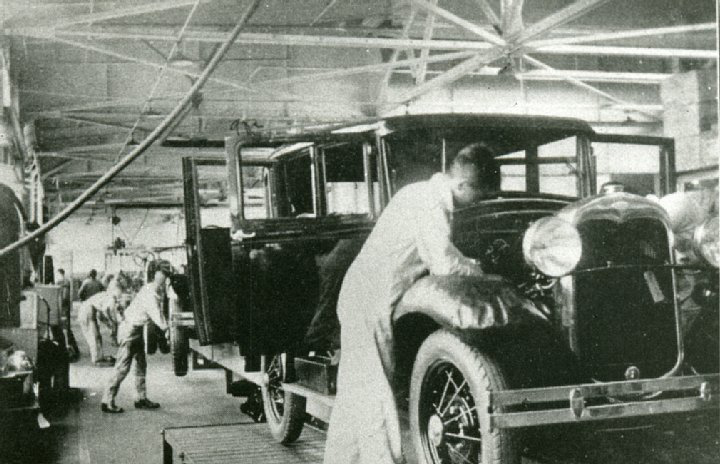
  • Though they were not called such, people dedicated to HRM functions started appearing in the USA in the 1920s when mass production started spreading. Personnel administrators were often called welfare secretaries in the 1920s. Much of the modern theoretical work on HRM began around this period. The studies conducted by George Elton Mayo (1880-1949), especially the Hawthorne Studies is credited as the foundation of the Human Relations Movement in management.
  • The Wagner Act of 1935 in USA (also called the National Labor Relations Act) increased the role of personnel managers in addition to strengthening the position of labour unions.
  • Only after WWII can we find specially designated units taking care of typical HRM functions. In many Western countries, collective bargaining defined industrial relations and HR gained in importance.
Photo source:

During WWI, more and more women entered the job market in the industrialised world to fill the gaps left by men gone to the front. This helped create a group of skilled white-collar people who were able to negotiate with labour unions as well as with new employees.

The 1920s saw "labour manager" and "employer manager" job titles in the larger engineering industries. After the great depression, larger corporations in the 1930s, began realising the increased need and value in having specialised staff for recruiting, retaining and motivating employees to perform better. The war effort in WWII, revealed that employment management and functions previously classified as welfare were linked together.


From the 1960s, the rise of Japan as a commercial power also required efficient HR systems being adopted by the Japanese corporations.


Photo source:

The spread of multinationals and large corporations created a highly skilled professional group of human resource personnel. Globally, the profile of HRM started attracting mention in the 1970s and started becoming widely recognised by the 1980s. 

Universities and Business Schools started teaching different aspects of HRM in the 1990s. Cornell University's School of Industrial and Labor Relations  was the first business school in the world for college-level study in HRM.


In the first decade of 2000, there was a strong movement to see HR as a strategic partner to business rather than as a support function system and this continues.


Challenges Faced by Contemporary HR

The most recent areas where HR faces critical challenges are:

  • managing employee performance and turnover
  • high attrition of strategic talent
  • innovative training, skills deployment and retention methods
  • ways to make workforce more responsive to turbulent business markets
  • getting high employee performance through right packaging of benefits and compensation in novel ways
  • corporate social responsibility 
  • sustainable growth both as individuals and as a business
  • business innovation
  • novel methods of engaging employees as well as stakeholders
  • taking care of environmental concerns
Photo source:

Needless to mention that all this should come along with increased performance and with minimal investment in turbulent markets, which abhors making any long term commitments.


Download: 


Some excellent reference material about the history of human resource management and development:
  • BEAGRIE, S. (2004) Article - Events that changed human resources. Personnel Today. 2 November. pp22-24, 26.  
  • From personnel management to human resource management: How did this field of work develop? In: TYSON, S. (2006) Essentials of human resource management. 5th ed. Oxford: Butterworth Heinemann.
  • MACKAY, L. and TORRINGTON, D. (1986) The changing nature of personnel managementLondon: Institute of Personnel Management.
  • Mathis, Robert L. and Jackson, John H.  Changing Nature of Human Resource Management (2007) 12th edition, South-Western, Division of Thomson Learning
  • MCGIVERING, I. (1970) The development of personnel management. In: TILLETT, A. et al. (eds).Management thinkers. Harmondsworth: Penguin.
  • NIVEN, M.M. (1967) Personnel management: 1913-1963. London: Institute of Personnel Management.