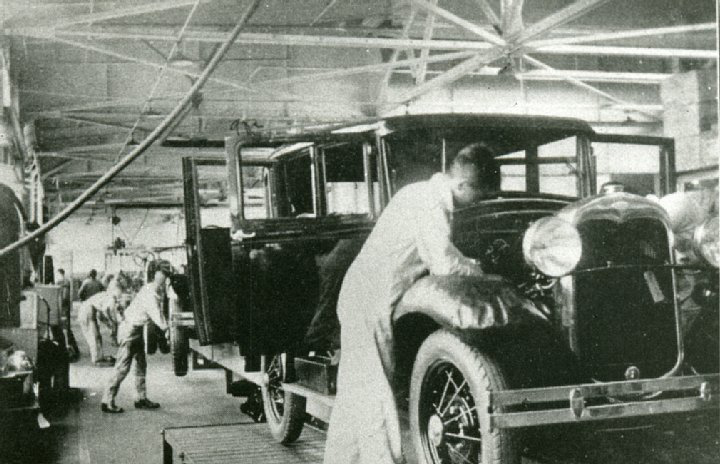
HRM, especially Strategic HRM or SHRM is talked about everywhere nowadays. Is HRM a contemporary invention full of fads? Is HRM or Human Resource Management a product of modern organizations or does it have ancient roots?

We can get a better understanding of the history of HRM by splitting the history question it into three sub-questions.
- How long has the term HRM (Human Resource Management) been used?
- How long have functions typically covered by HRM nowadays been studied and managed?
- How long has there been a dedicated unit, department or system taking care of these functions?

Definition of Human Resource Management - HRM
Typically Human Resource Management is the organizational function that deals with diverse issues related to employee compensation and benefits, hiring, employee retention, performance management, organization development, safety/security, wellness, employee motivation, communication, administration, development and training (though some of these may be handled by HRD (Human Resource Development) functions also.
A formal concise definition of HRM (Mathis, Jackson 2007) is
 Photo source:
"The design of formal systems in an organization to ensure the effective and efficient use of human talent to accomplish the organizational goals."Another way to define would be that HRM is concerned with the policies, practices and systems that influence employees’ workplace behaviour, attitudes and performance. HRM is a process (or a grouping of processes) of managing human talents/skills to achieve the organisation’s objectives. The core aim of all management, to increase predictability and achieve better control of events is central to HRM.

Examples of processes typically handled by HRM:
- Employee compensation and benefits
- Industrial relations – The relationship between employees and management directly or indirectly, through collective bargaining, affected by union-employer relationship
- Performance and appraisal
- Safety, security and occupational health management
- Staffing – Job analysis, recruitment, selection and retention

How long has the term HRM been used?
The term HRM is not that old actually.
- The term HRM evolved in USA out of the earlier Personnel Management or PM in the early 1960s.
- Merriam-Webster dictionary claims that the first recorded use of the term Human Resource is from 1961.
- By the mid 1980s, the term HRM or Human Resource Management started appearing and it quickly replaced Personnel Management or Personnel Administration.
How long have functions typically covered by HRM today have been studied and managed?
This is very interesting and requires some myth busting. Most of the functions typically covered by HRM today, have a much longer history than is widely believed. The claim that Performance Management or PM in organisations was created, first in the USA, to deal with the paperwork needed to hire employees and handle the payroll is not entirely true.

Code of Hammurabi
Though not using modern terms, ancient texts have many recorded instances of current HRM functions.
- The ancient Code of Hammurabi from Babylon in 1750 BC sets minimum wages, obligations for expert craftsmen to transfer their skills to apprentices, quality standards for builders, and healthcare obligations for owners of slaves.
- Roman philosopher Pliny the Elder in the first century AD, warned about the health hazards of employees handling zinc and sulphur. He prescribed the use of protective masks made from animal bladder.
- In 1556, the German scientist Georgious Agricola in his De Re Metallica describes occupational hazards of employees and suggests methods for improving occupational health.
- In 1700 Bernardo Ramazzini, known as the "father of industrial medicine," published in Italy the first comprehensive book on industrial medicine, De Morbis Artificum Diatriba (The Diseases of Workmen).
- In 1850 Abraham Lincoln viewed all American workers as potential entrepreneurs.
- The modern usage dates from after WWII, when Personnel Management practitioners in the USA wanted to differentiate PM from other managerial functions.
Personnel Administration (PA) or Personnel Management (PM) evolved into HRM. There are some conceptual differences.

Main Differences Between Personnel Management and Human Resource Management
- The main difference is that PM was reactive, focussed on the immediate and short-term needs of the labour force of an organisation while HRM expanded into a proactive strategy of aligning the needs of the workforce to the strategic objectives of the organisation
- PM was focussed on traditional models of industrial relations e.g. union- based collective bargaining, HRM has moved towards a more devolved and participative model
- HRM is more involved (often in an advisory capacity) in pay policy and job-design than PM ever was
- HRM has more scope in influencing the nature of the work contract than PM ever had

How long has there been a dedicated unit, department or system taking care of HRM functions?

In the modern context, we know precisely when it all began.
- The first recorded modern case of dedicating a separate unit or department for HRM is from 1901 in USA. The National Cash Register Co. faced a disruptive strike yet won the battle with the unions. Learning from this, the president of the company, John H. Patterson, organized a personnel department dedicated to improving worker relations by properly handling employee grievances, discharges, safety and other employee issues.
- Though they were not called such, people dedicated to HRM functions started appearing in the USA in the 1920s when mass production started spreading. Personnel administrators were often called welfare secretaries in the 1920s. Much of the modern theoretical work on HRM began around this period. The studies conducted by George Elton Mayo (1880-1949), especially the Hawthorne Studies is credited as the foundation of the Human Relations Movement in management.
- The Wagner Act of 1935 in USA (also called the National Labor Relations Act) increased the role of personnel managers in addition to strengthening the position of labour unions.
- Only after WWII can we find specially designated units taking care of typical HRM functions. In many Western countries, collective bargaining defined industrial relations and HR gained in importance.

During WWI, more and more women entered the job market in the industrialised world to fill the gaps left by men gone to the front. This helped create a group of skilled white-collar people who were able to negotiate with labour unions as well as with new employees.
The 1920s saw "labour manager" and "employer manager" job titles in the larger engineering industries. After the great depression, larger corporations in the 1930s, began realising the increased need and value in having specialised staff for recruiting, retaining and motivating employees to perform better. The war effort in WWII, revealed that employment management and functions previously classified as welfare were linked together.
From the 1960s, the rise of Japan as a commercial power also required efficient HR systems being adopted by the Japanese corporations.

The spread of multinationals and large corporations created a highly skilled professional group of human resource personnel. Globally, the profile of HRM started attracting mention in the 1970s and started becoming widely recognised by the 1980s.
Universities and Business Schools started teaching different aspects of HRM in the 1990s. Cornell University's School of Industrial and Labor Relations was the first business school in the world for college-level study in HRM.
Universities and Business Schools started teaching different aspects of HRM in the 1990s. Cornell University's School of Industrial and Labor Relations was the first business school in the world for college-level study in HRM.

In the first decade of 2000, there was a strong movement to see HR as a strategic partner to business rather than as a support function system and this continues.
Challenges Faced by Contemporary HR
The most recent areas where HR faces critical challenges are:
Challenges Faced by Contemporary HR
The most recent areas where HR faces critical challenges are:
- managing employee performance and turnover
- high attrition of strategic talent
- innovative training, skills deployment and retention methods
- ways to make workforce more responsive to turbulent business markets
- getting high employee performance through right packaging of benefits and compensation in novel ways
- corporate social responsibility
- sustainable growth both as individuals and as a business
- business innovation
- novel methods of engaging employees as well as stakeholders
- taking care of environmental concerns

Needless to mention that all this should come along with increased performance and with minimal investment in turbulent markets, which abhors making any long term commitments.
Download:
Some excellent reference material about the history of human resource management and development:
- BEAGRIE, S. (2004) Article - Events that changed human resources. Personnel Today. 2 November. pp22-24, 26.
- From personnel management to human resource management: How did this field of work develop? In: TYSON, S. (2006) Essentials of human resource management. 5th ed. Oxford: Butterworth Heinemann.
- MACKAY, L. and TORRINGTON, D. (1986) The changing nature of personnel management. London: Institute of Personnel Management.
- Mathis, Robert L. and Jackson, John H. Changing Nature of Human Resource Management (2007) 12th edition, South-Western, Division of Thomson Learning
- MCGIVERING, I. (1970) The development of personnel management. In: TILLETT, A. et al. (eds).Management thinkers. Harmondsworth: Penguin.
- NIVEN, M.M. (1967) Personnel management: 1913-1963. London: Institute of Personnel Management.