Showing posts with label human resources. Show all posts

Sunday, 7 June 2009

Maternity Leave – How Different Countries Treat Working Mothers?

How a society treats working mothers, tells much about that society and its values. Is that really true? 


Why doesn't rich USA pay maternity leaves to its mothers? 
  • There are only 2 poor countries in the world, Papua New Guinea and Swaziland that probably cannot afford to pay. 
  • Even the United Nations pays its women employees 16 weeks at 100% salary maternity leave.


Photo Source: Wikimedia Commons

Ask any mother and she will tell you that in addition to the material needs of the mother and her baby (e.g., the ability to pay all bills), a mother needs practical help and guidance, support with social and emotional reassurance, physical comfort and health, and appreciation.


What is Maternity Leave?

Maternity leave, often called parental or family leave, is the time a mother (or father to some degree) takes off from work for the birth or adoption of a child. 

State paid "maternity leave" —the norm in most Western and some other countries, developed or even developing — is absent in the United States. 

Some enlightened US companies do offer new parents paid time off, up to six weeks in some cases.


Why Should the State Pay Maternity Leaves?

The idea that the state should be responsible for providing money to help maintain mothers who have given birth, and cannot work as usual is absent in most ancient societies. The responsibility for maintaining mothers and children was the husband’s, families or the community’s. 


Even the largest matrilineal society in the world today, the Minangkabau of West Sumatra, in Indonesia does not have this concept. In the Minangkabau culture, property and land passes down from mother to daughter, while business, religious, and political affairs are the province of men (although some women do play important roles in these areas). Very prescient these Minangkabau! They knew long before the current financial crisis that businesses fail, religions get corrupted not to talk about politics, but property and land retain value.


Photo Source: Wikimedia Commons 

Never before have so many mothers needed to work outside the home along with men (excluding the farm). In an increasing numbers of societies one income is not enough to support a family.

The custom of paid maternity leaves varies greatly among countries. 


  • Cuba already started paying maternity leaves to working mothers in 1934 
  • Sweden in 1931. 
  • Afghanistan and Iran have 90 days maternity leave paid by the state. 
  • The tiny Estonian government gives a generous 455 calendar days with 100% salary compensation to mothers
  • The rich and mighty United States government has no national provision for paid maternity leave.
  • Only 2 US states, California and New Jersey pay six weeks of maternity leaves though the jobs are not guaranteed
A diminishing number of children endanger the continuity of the nation state. In Estonia, protecting and nurturing each child, and the more the better is a prime directive for preserving the ethnic Estonian nation. In 1761, British physician William Buchan (1729–1805) noted that one half of the human race dies in infancy, with ominous consequences for the health of the state. 


Photo source:

Deborah Dwork (1987) in her book War Is Good for Babies and Other Young Children: A History of the Infant and Child Welfare Movement in England 1898-1918 “ claims that WWI, was actually good for motherhood and childbirth in Britain.

Women Working Till Delivery Day Have More Cesarean Sections Women who worked right up to the delivery day were more likely to have a costly cesarean section, according a study funded by the U.S. Health Resources and Services Administration. 

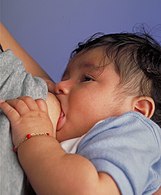
A second study found that the longer a new mother delayed returning to work, the more likely she was to breastfeed – a practice recommended by other studies and the American Academy of Pediatrics to decrease the risk of allergies, obesity and sudden infant death syndrome.


Photo source:

History of Paid Maternity Leaves in Different Countries

Paid maternity leaves were first established, in a modern context, as a part of social insurance by Bismarck in Germany in 1883. France followed soon. In 1919 the International Labor Organization, adopted its first convention claiming that mothers be entitled to a maternity leave of 12 weeks in two equal parts preceding and following childbirth. 


In most western countries parental leave is available for those who have worked for their current employer for a certain period of time. Sweden provides generous parental leave: all working parents are entitled to 16 months paid leave per child, the cost being shared between employer and State. 


Photo source:

Other Opinions on Maternity Leaves


Photo source:


The extension of maternity leave to up to a year may be sabotaging women's careers according to Nicola Brewer, chief executive of the Equalities and Human Rights Commission in UK. She claims that some employers were thinking twice about offering women jobs or promotion.


First Israeli Gay Man Gets 'Maternity' Leave


Photo source:


The National Insurance Institute authorized Israel's first-ever "maternity" leave for a male couple on Thursday. 

Yonatan Gher, director of Jerusalem's nonprofit Open House Pride and Tolerance organization, has received institute approval of a 64-day leave from work on the occasion of the birth of his biological son, born of a surrogate mother in India.


Monday, 2 February 2009

Do Biethnic or Biracial People Make Better Employees?

Do biethnic, biracial or bicultural adults make better employees at the workplace? 

This can be an extremely difficult question to research and any conclusions drawn could be rather provocatively over generalistic and even misleading. But the research question - 
"Does a Biethnic Background Provide Advantages in Adapting Socio-culturally to Workplace Norms and Behavioural Skills Requirements?" can give us more precise data.
Photo credit:

The number of biethnic or biracial people, who are children born to parents from different ethnic backgrounds has grown rapidly all over the globe. There are many studies of how biracial or biethnic children and adolescents adapt to their environment where monoethnic people, who are children born to parents from the same ethnic backgrounds are a majority by default.


But there is not much research on how biethnic adults adapt to the workpace.

As a research student at
Leicester University, UK I aimed to discover if a biethnic background provides any advantage to a biethnic adult in adapting to the modern international workplace. To make research manageable, once single country was chosen and this was Finland (because I live here).

Finland as a country is very different from a melting pot society like the USA or multiethnic UK. Only about 2% of the Finnish population of 5.2 million are of foreign origin and most of the biethnic people in Finland are in their childhood or youth. So there are not that many biethnic adults in working life in Finland.


How to Find Biethnic Employees in the Workplace?

  • The ethnicity of an employee is classified information and may not be known to managers or human resource departments. 
  • Biethnicity is not always physically visible and sometimes people don’t talk publicly about their ethnic backgrounds. 

This makes finding biethnic adults at the workplace very difficult. 48,5% of the people contacted, i.e., fourteen biethnic adults working in different organisations were located through snowballing technique and semi-structured in-depth interviews were conducted.

The interviewees evaluated their own adaptation to the norms and behavioural requirements of their current organisation and also contrasted their own adaptation with how they saw monoethnic colleagues adapted to the same workplace.


Three main findings of the Biethnic Adult Workplace Adaptation Research:

  1. Biethnic adults adapt well to the international workplace in Finland, from their own perspective and also when they contrast their own adaptation to that of the monoethnic majority in the workplace.
  2. Biethnicity or a bicultural background and other factors affect how biethnic adults adapt to the workplace in Finland. 
  3. Being biethnic or bicultural gives a unique perspective but personality traits, skills, motivation, individual life circumstances, and most importantly the interplay with others at the workplace play a greater role in the adaptation process.


Photo source:
Measuring the Socio-Cultural Adaptation of Employees

How can the socio-cultural adaptation of employees at the workplace be measured? This is not very easy as there are many subjective components involved here. Some of the following criteria affect this issue of adaptation significantly.
  • What is understood by adaptation?
  • How do people define their own identities?
  • Do the terms biethnic, biracial and bicultural mean different things or do they get mixed up in the usage?
  • Is one person's ethnic or cultural identity externally visible or easily apparent and recognised?
  • Does the person consider adjustment, adaptation to the workplace as a desirable state of affairs?
  • Are the persons own criteria for success of adaptation the same as other peoples' criteria?
  • How does one know that one has 'successfully' adapted?
Photo source:

Many even large organisations in Finland do not have any measures for facilitating the socio-cultural adaptation of employees by focussing on norms and behavioural skills requirements, though they regularly have normative systems for inducting new employees by guiding them through work processes, organisational systems, practical facilities and task requirements. 


People From Biethnic Backgrounds Adjust Well Socially


Yes, people from biethnic backgrounds adjust well socially, there is no indication that their adaptation is anyway faulty or less successful.


Photo credit:

Barack Obama, the eloquent president of the USA has now become a glorious mascot for biethnic people as highly successful and able individuals, who rise and succeed against many odds.

Successful socio-cultural adaptation to the workplace or organisational socialization is a very complex process dependant on many variables and the research subjects confirm this. The findings of this research, however, stand out in stark contrast to some earlier adaptation literature, which suggested that offspring from mixed marriages adjust badly socio-culturally.


What is the Message of Biethnicity Research for Organisations?

The working environment in our world has become more demanding and stressful, though many things have consistently improved over the decades. 

Management and human resource functions have become aware of the great importance of systematic and well-planned measures to manage talent in organisations. 


Photo source:

The biethnicty workplace adaptation research findings suggest that organisations should consider integrating norms and behavioural skills requirements into strategies for improving organisational socialization of employees in addition to task and process induction commonly used in organisations.

More details of biethnicity workplace adaptation research here

Some other places where this news reported by different media can be found:

EuroGraduate


I will be continuing research on the same theme some day towards a doctoral degree.